Inpage Navigation Section: Overview
New 2027
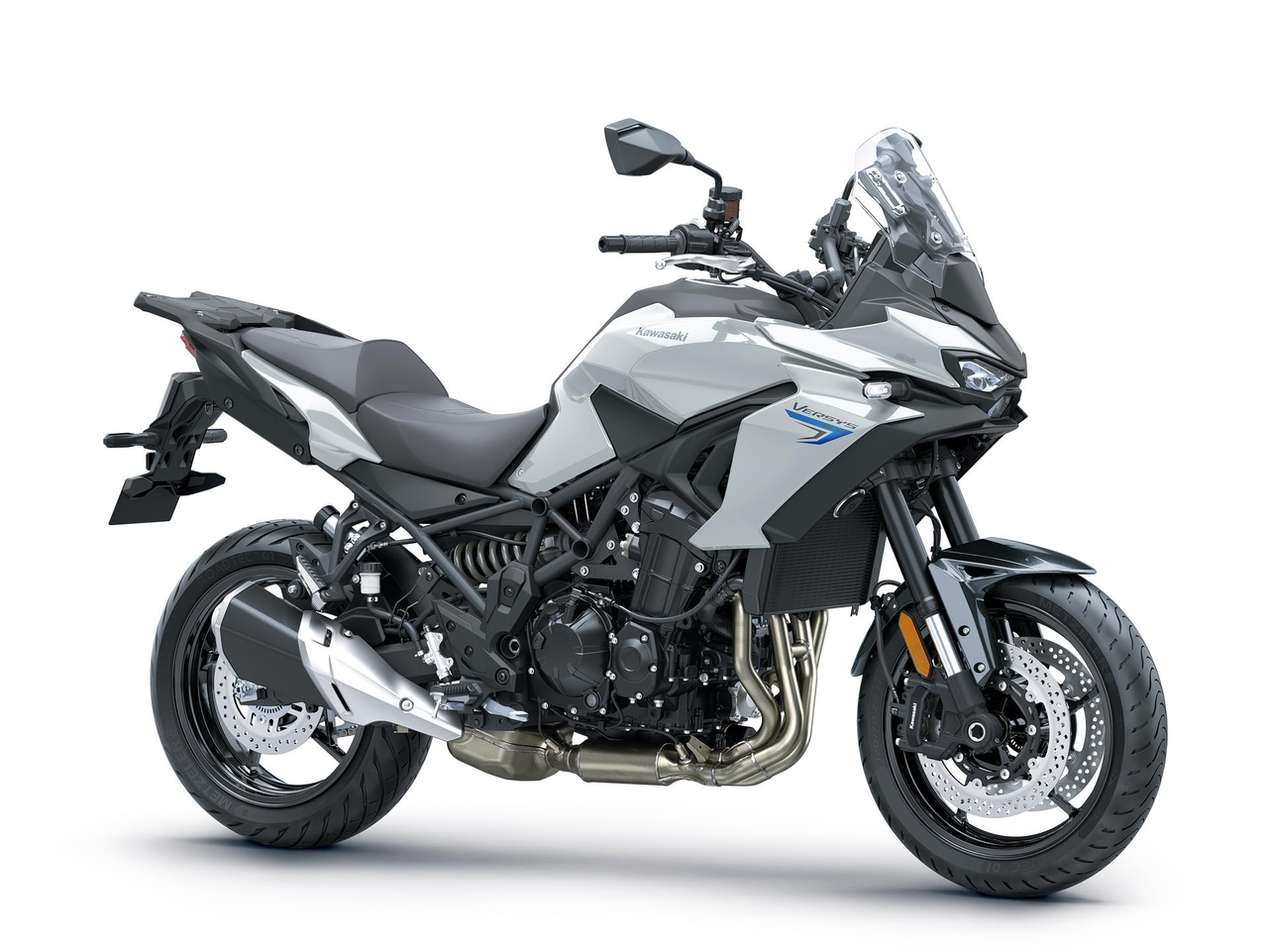
Versys 900
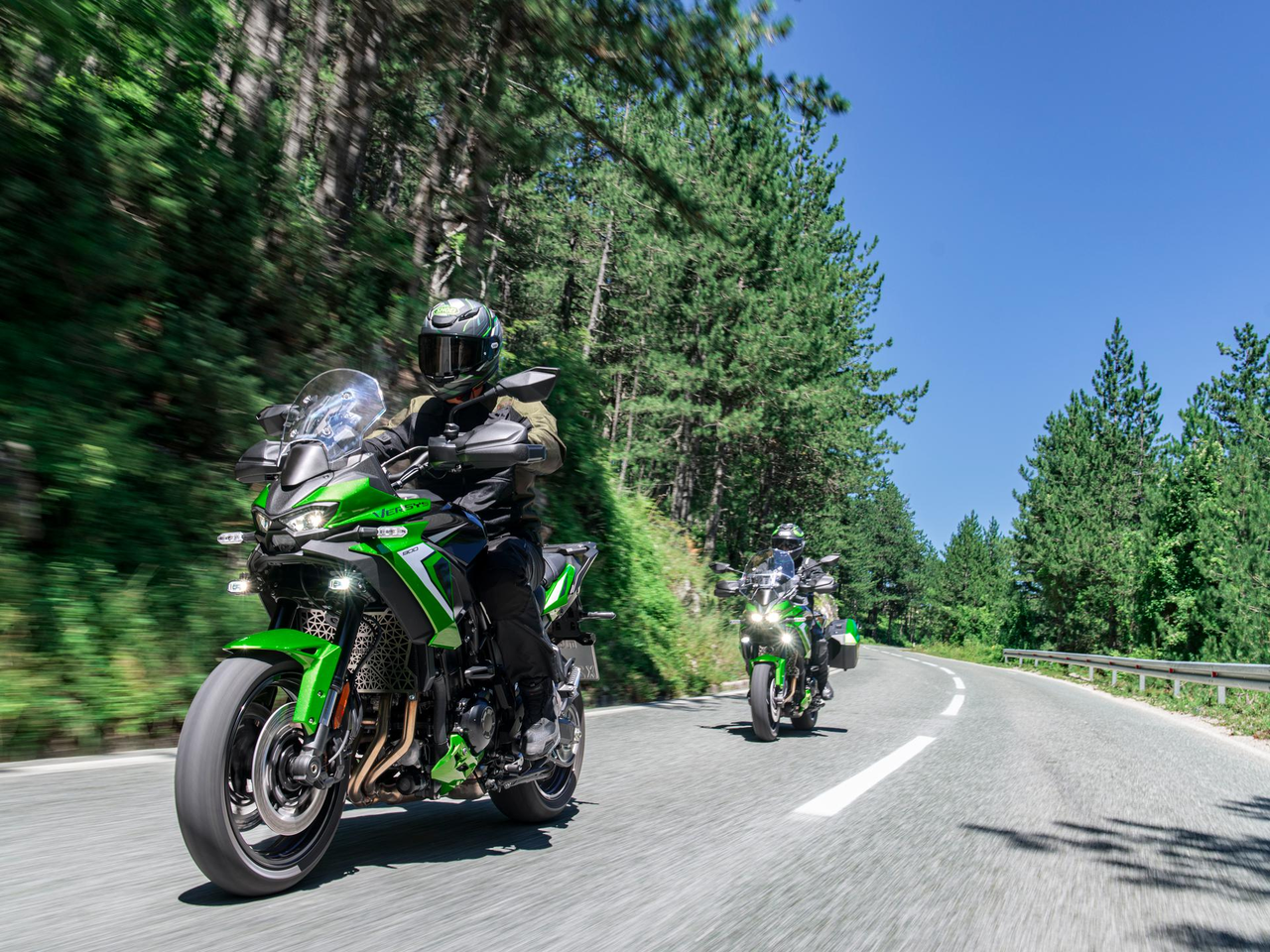
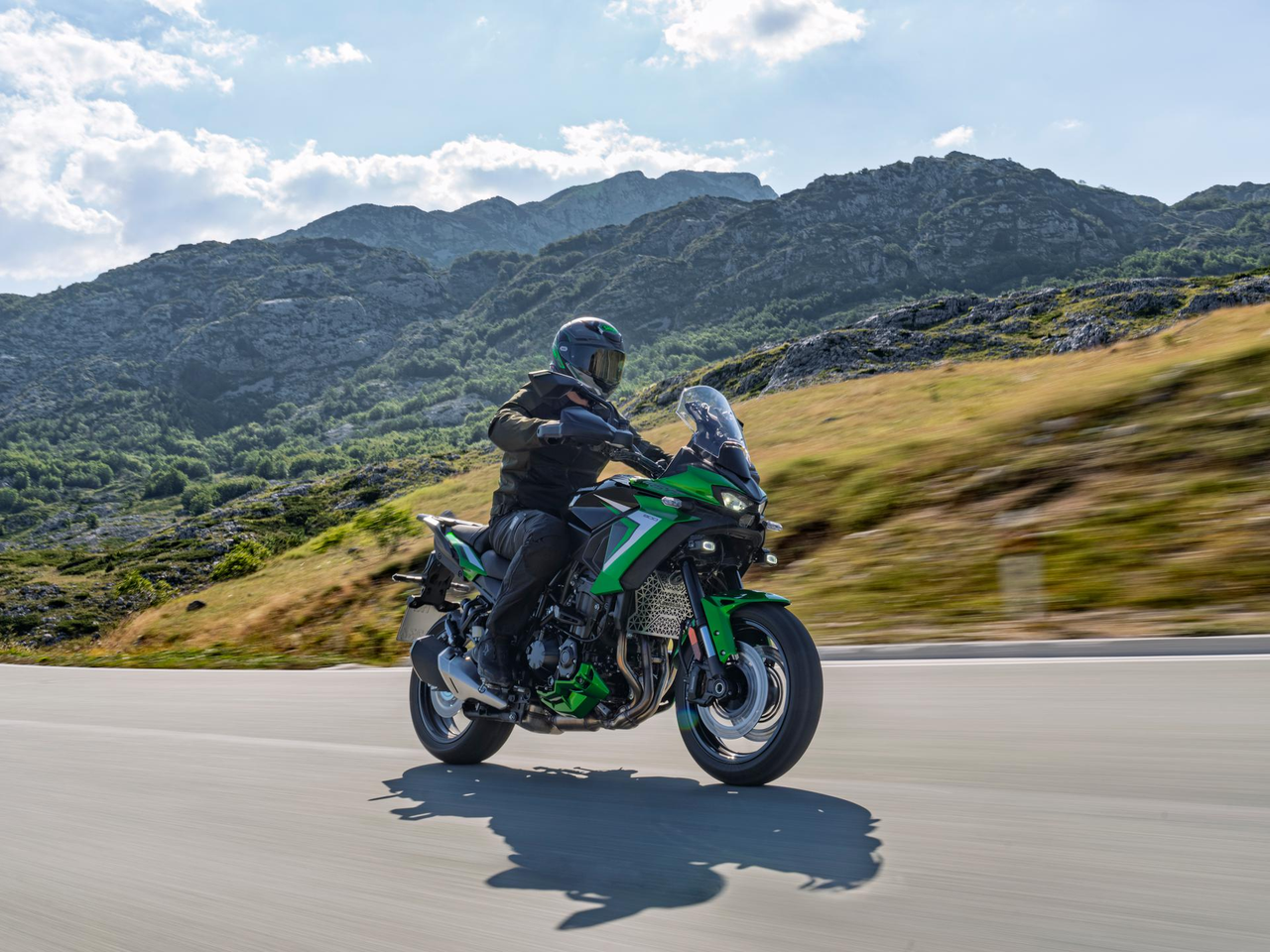
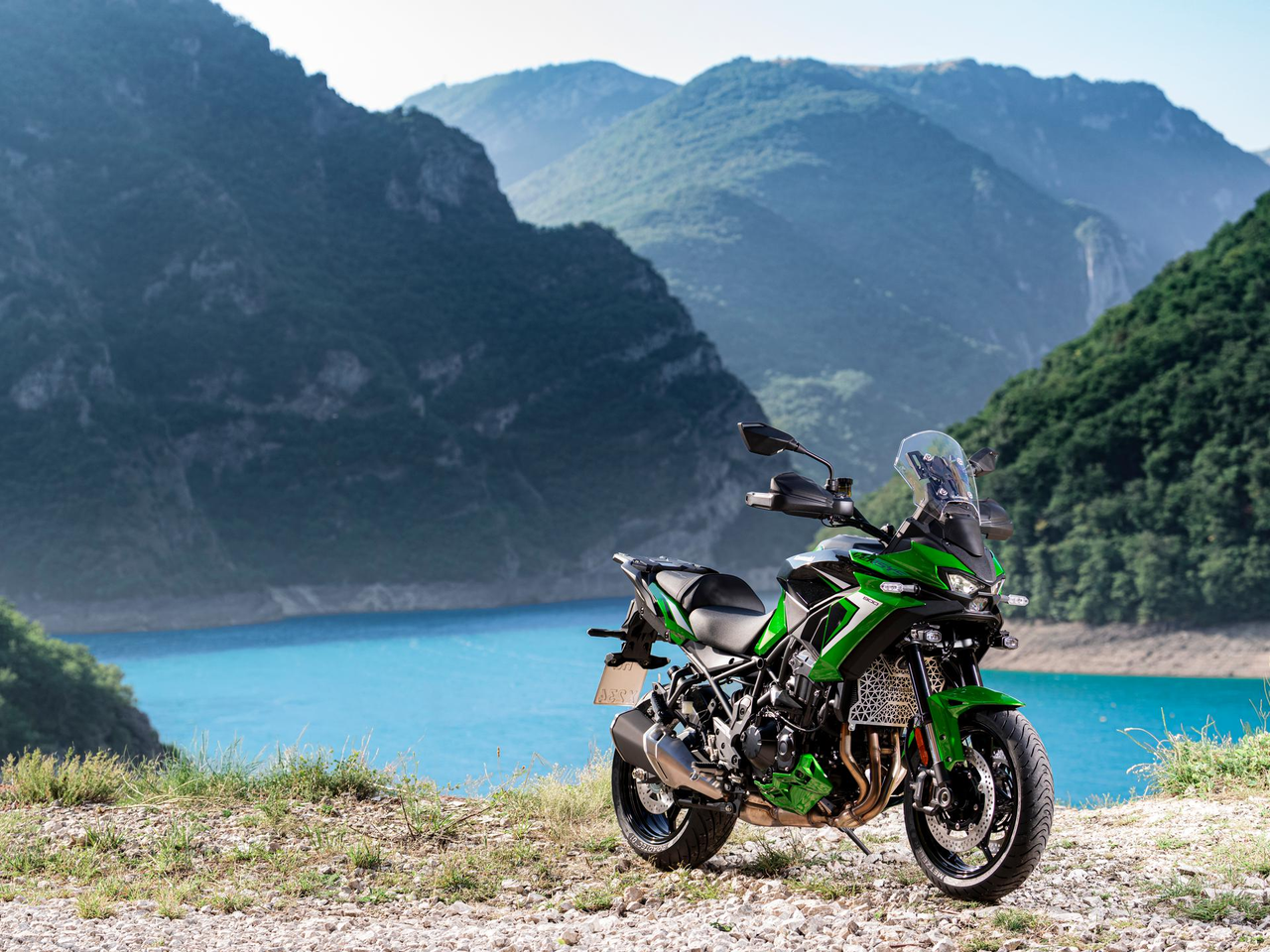
What happens when the iconic comfort of the Versys meets the thrill of Kawasaki's 948cc In-Line Four engine?
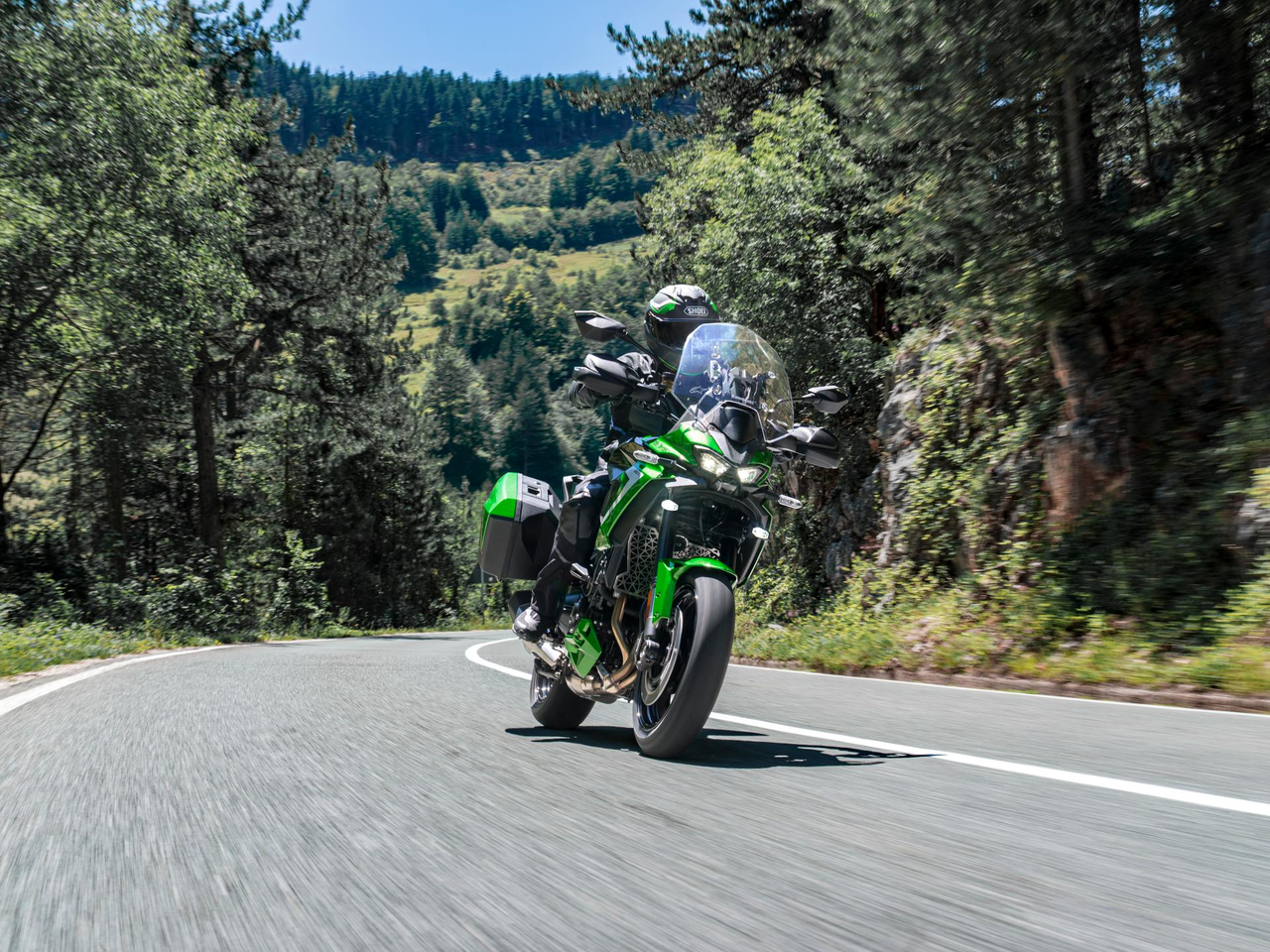
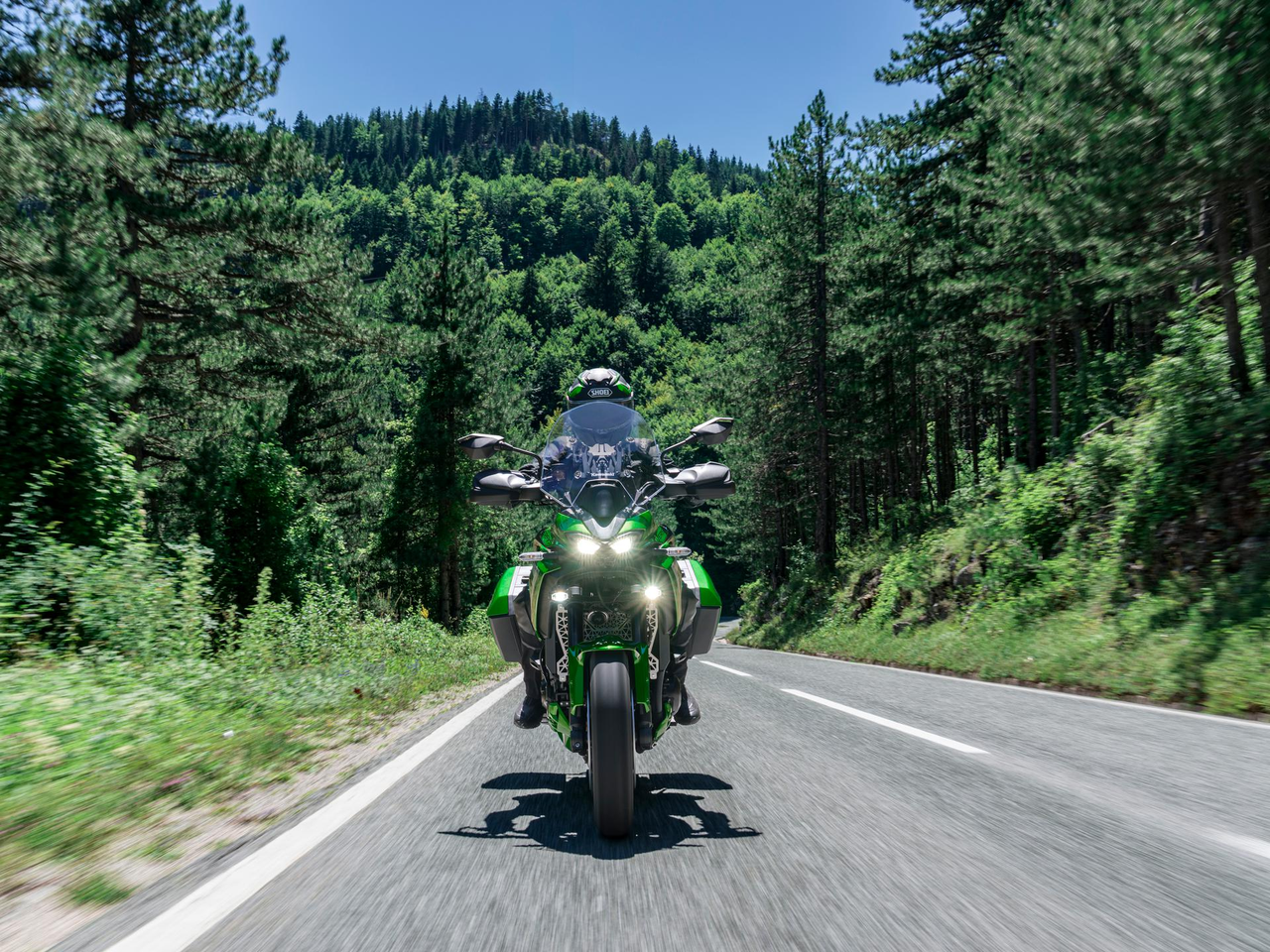
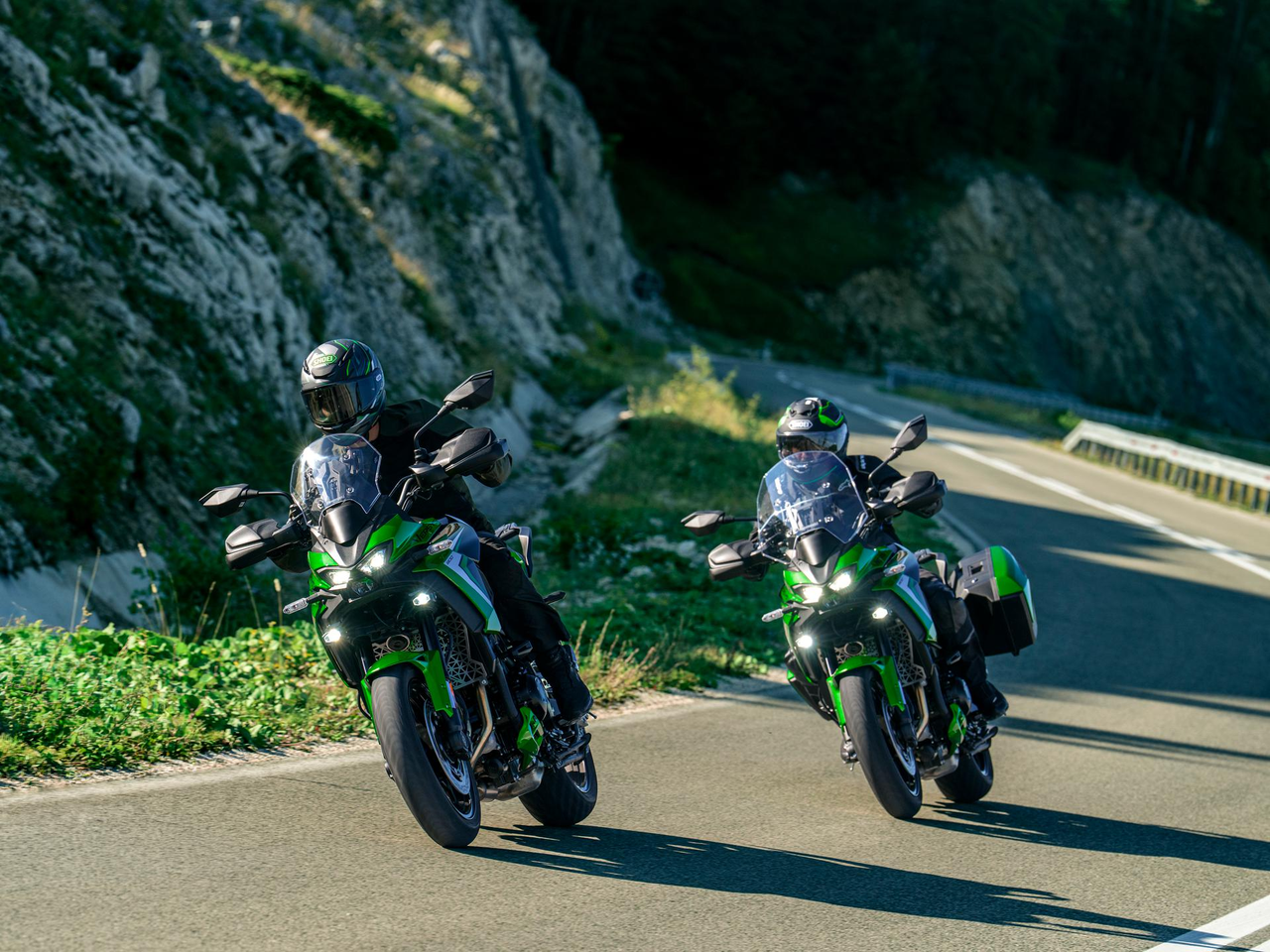
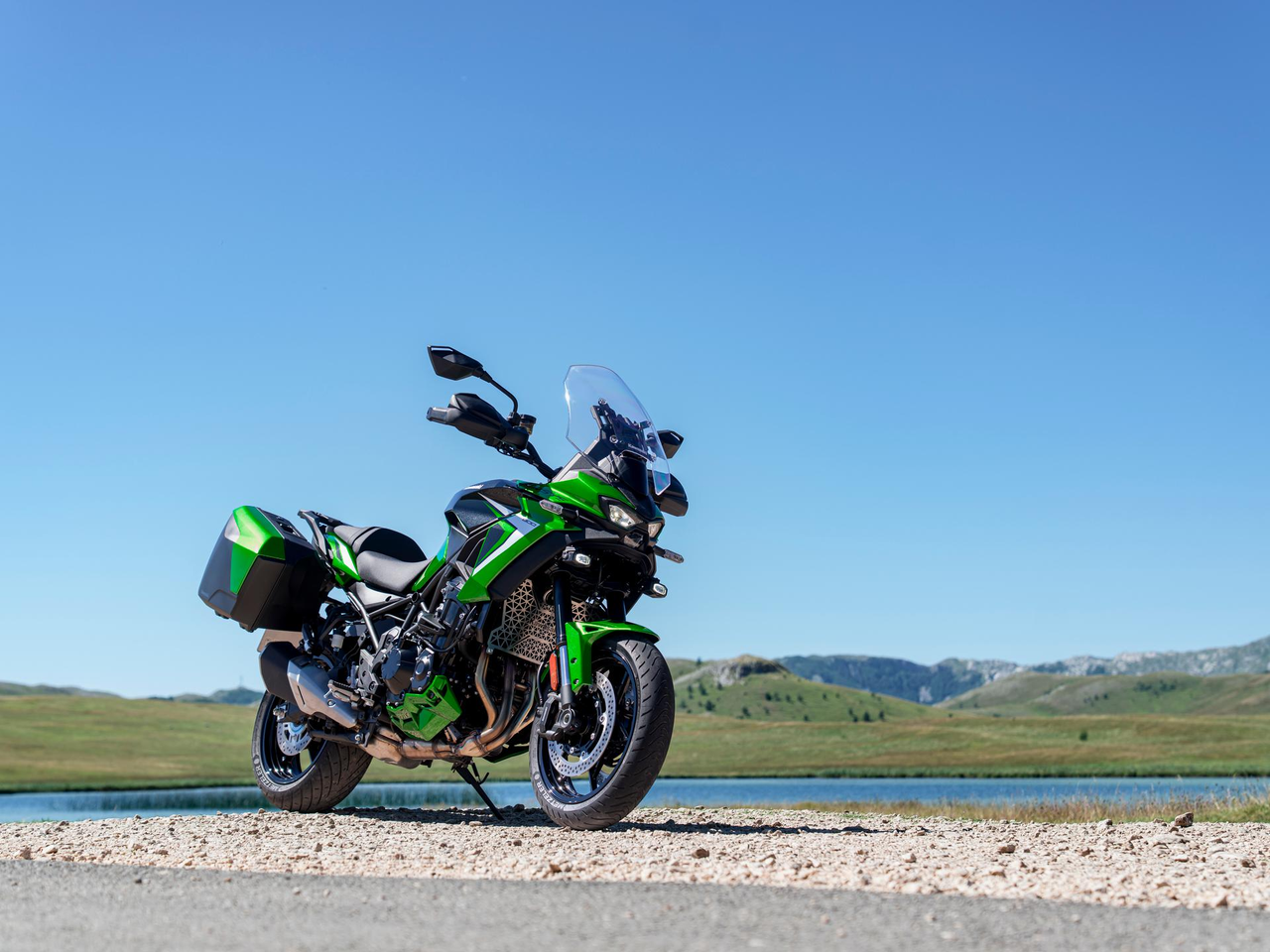
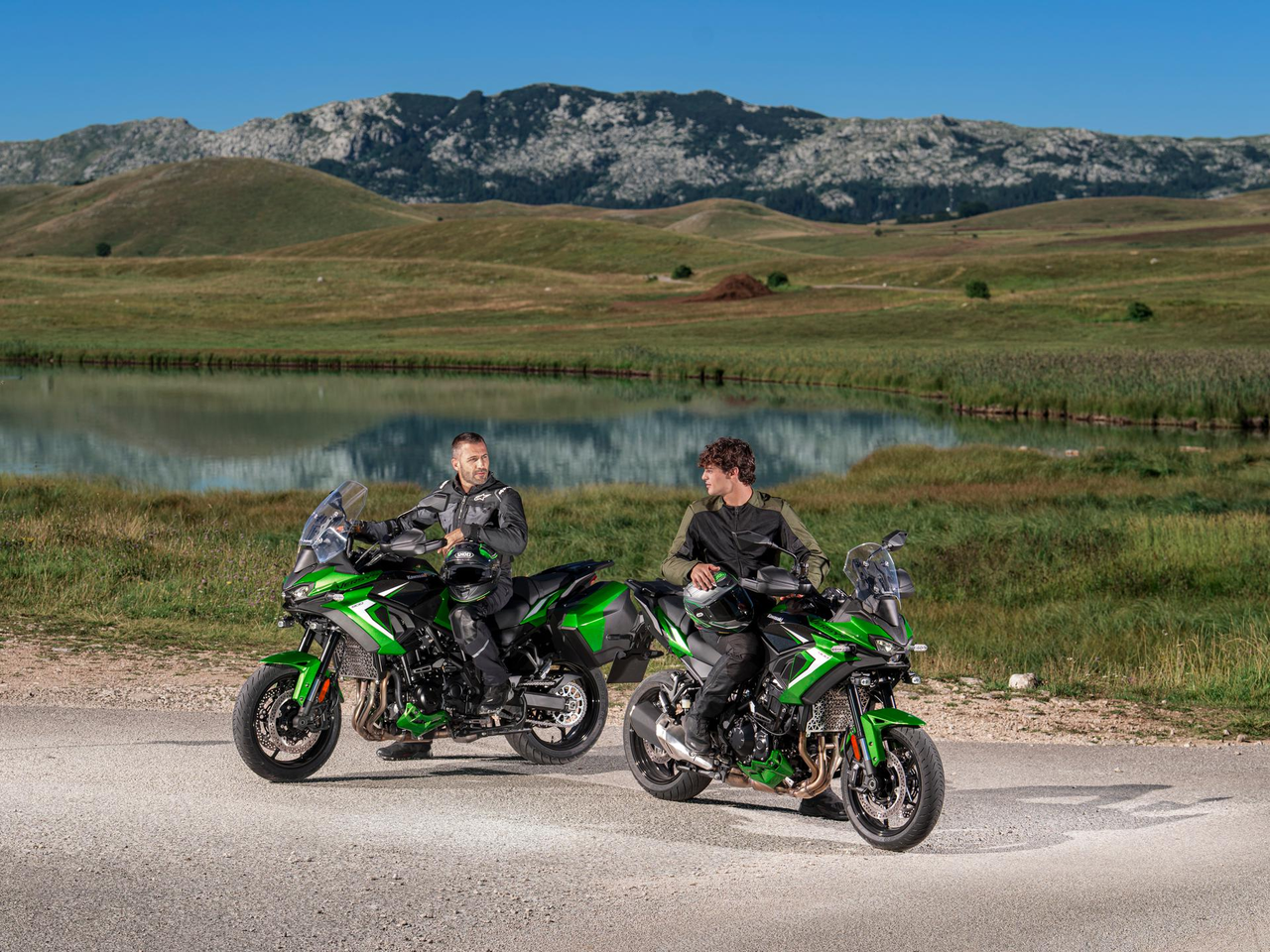
Introducing the Versys 900: a motorcycle that redefines sports touring, combining design, versatility and technology for an unforgettable riding experience.
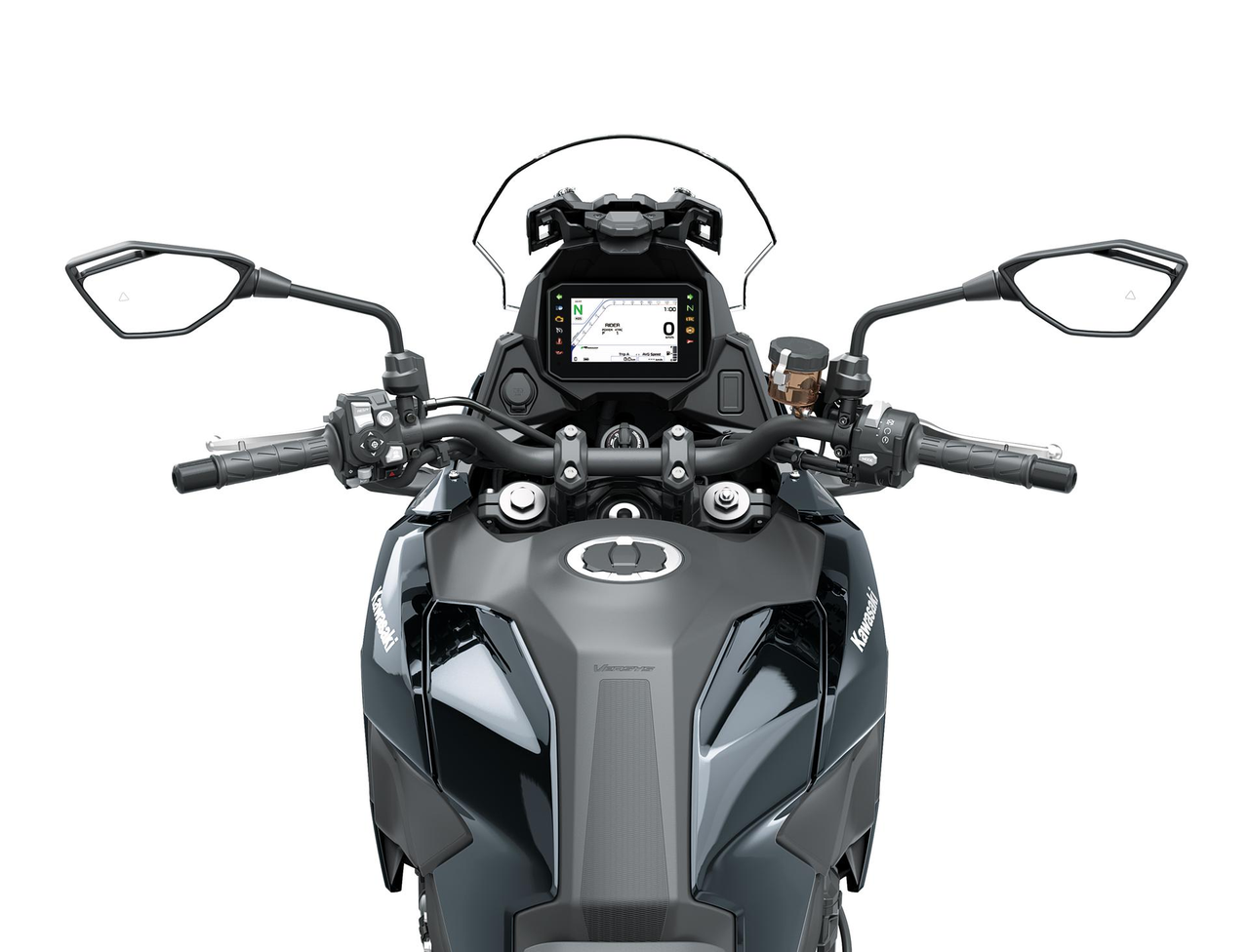
Equipped with the cutting-edge ARAS systems, including Adaptive Cruise Control Lite, Forward Collision Warning and Blind Spot Detection, plus a 5" TFT display, it's ready to take you anywhere - from city streets to scenic routes, whether riding solo or with a passenger.
The Versys 900 pairs its lightweight steel trellis chassis with the long-distance capability to make every journey as far as you wish.
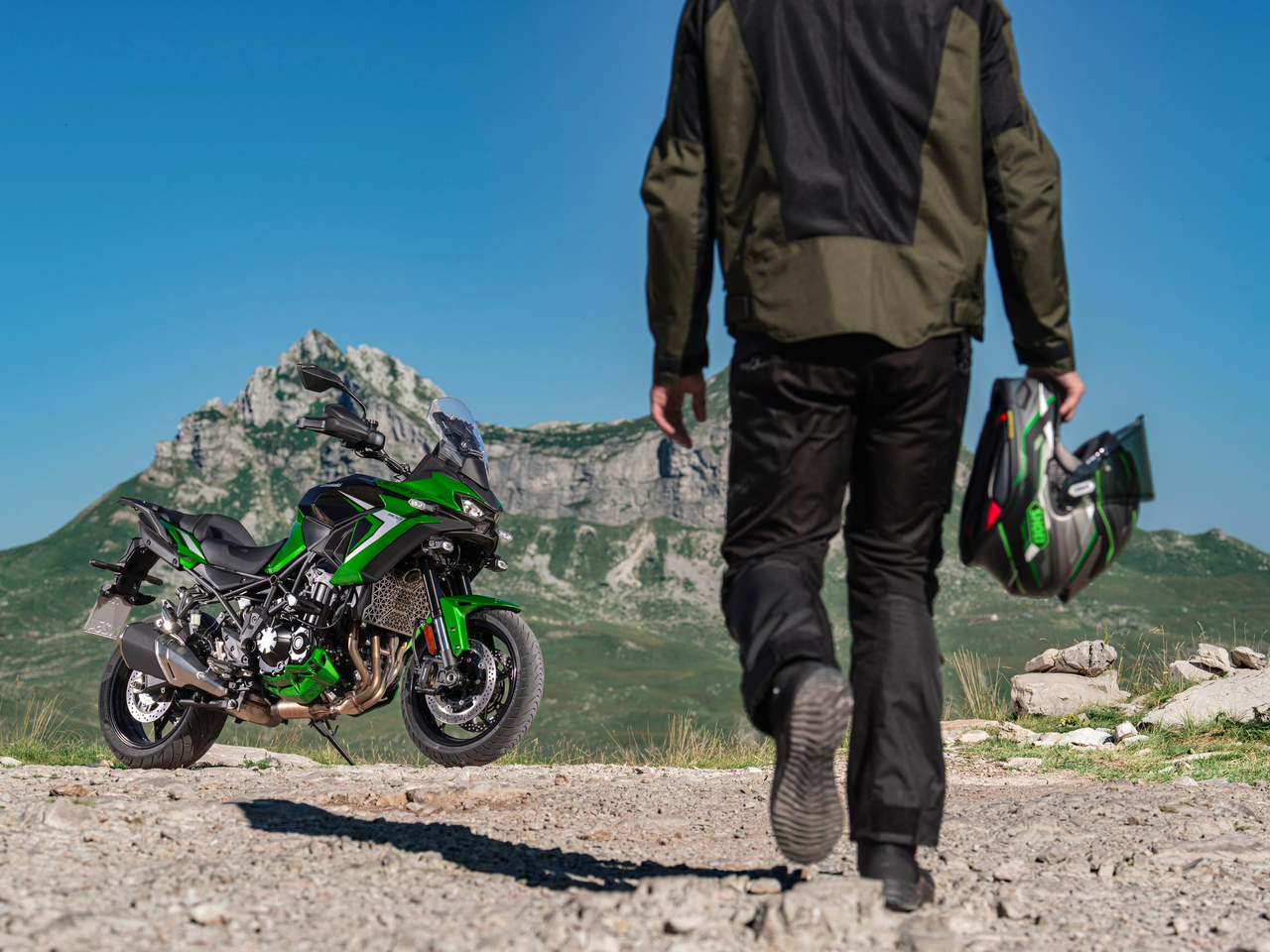
Get ready to expand your world and discover a new destination: Adrenaline.
Main Key Features
- All-New Steel Trellis Frame
- In-Line Four Engine Tuned for Sporty Versatility
- Sporty Chassis Geometry
- Long-Travel Suspension + Sporty 17” Wheels
- IMU-Equipped Electronic Riding Support Technology
- Aero Edge Concept
- Advanced Touring Support Technology: ARAS + ESS
- 5” TFT Instrumentation
- KQS Kawasaki Quick Shifter
- RIDEOLOGY THE APP MOTORCYCLE with Voice Command and Turn-by-Turn Navigation
- Well-Balanced Proportions
- Sport-Focused Top Case & Pannier System
- Rider Comfort for Confident Long-Distance Riding
Colours
Edition of Versys 900
Versys 900
Show all
Show less
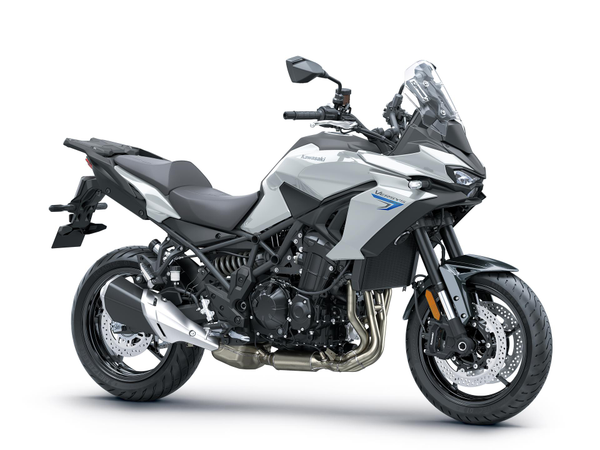
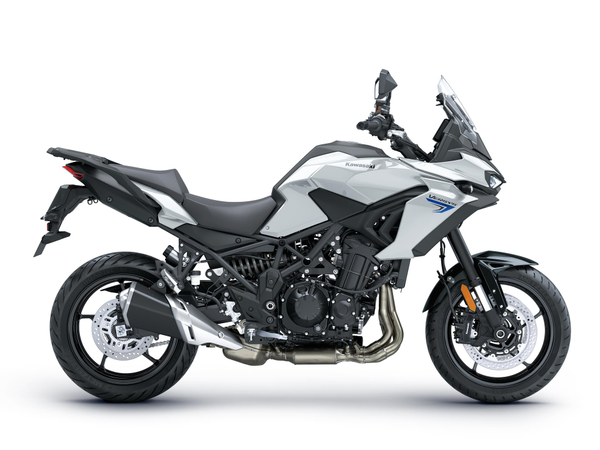
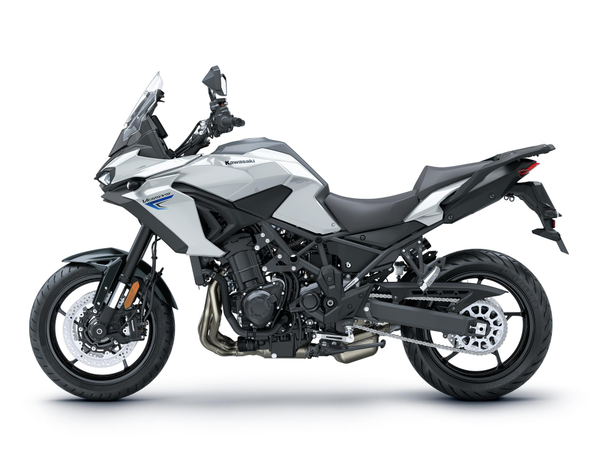
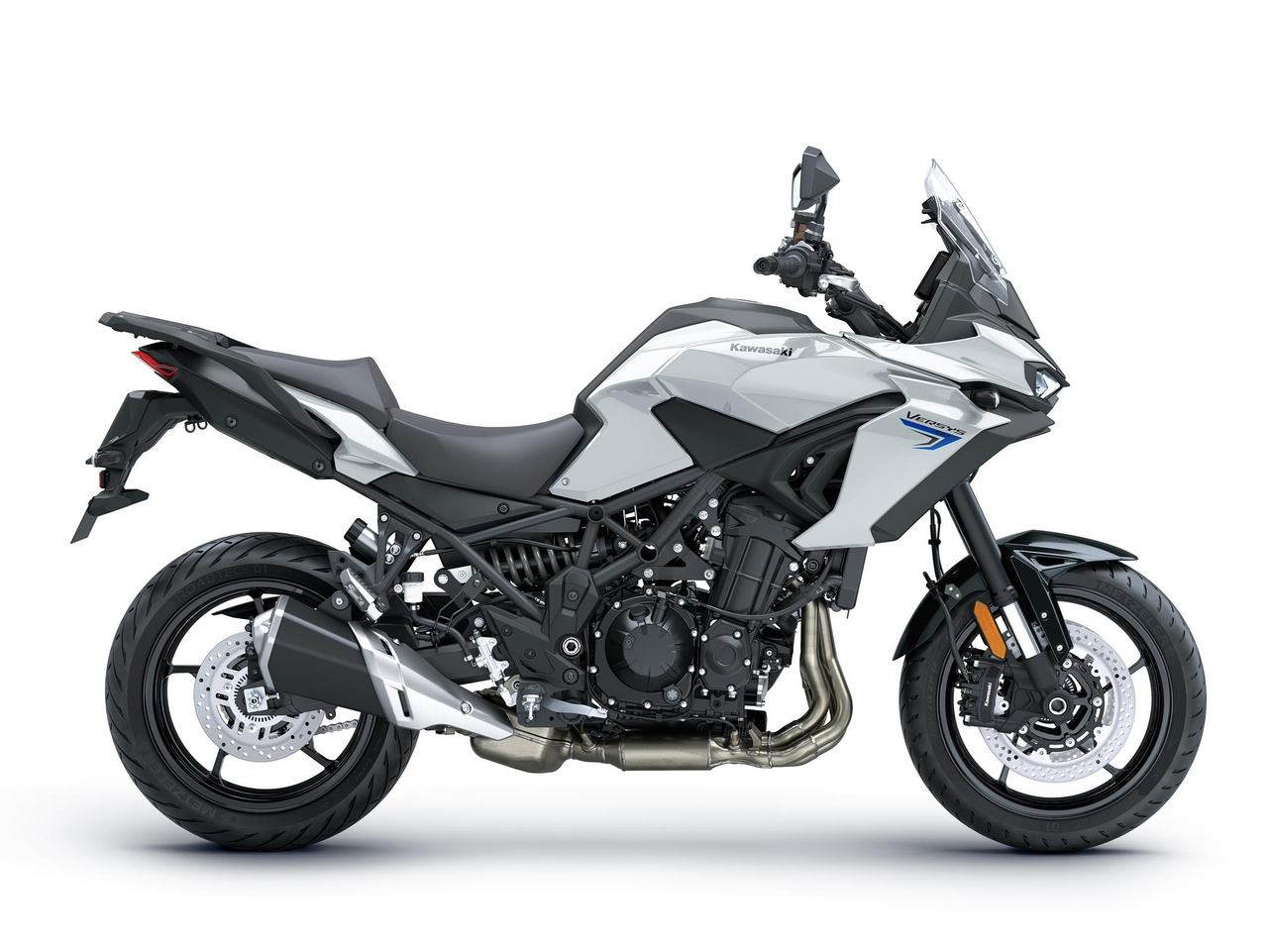
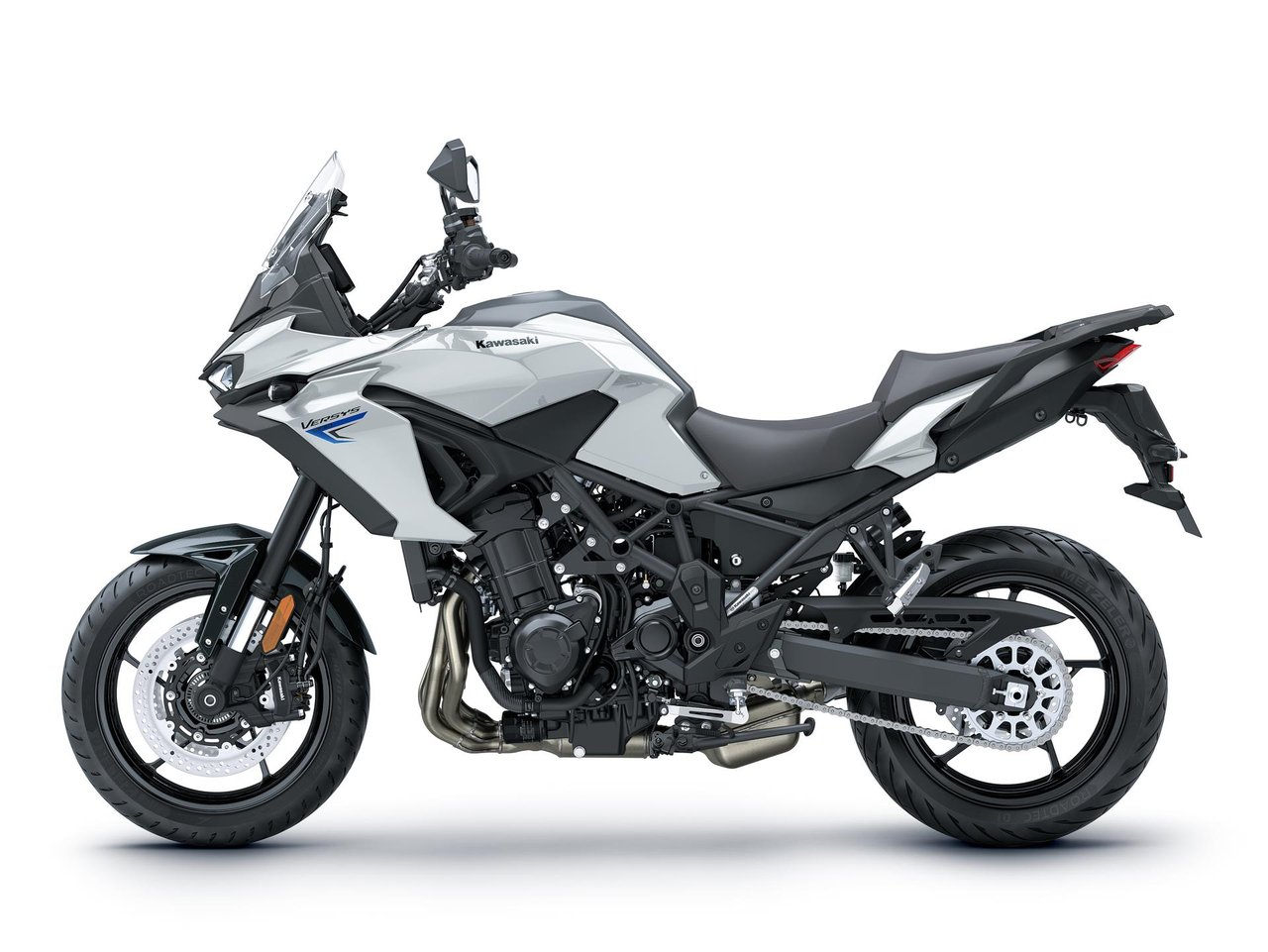
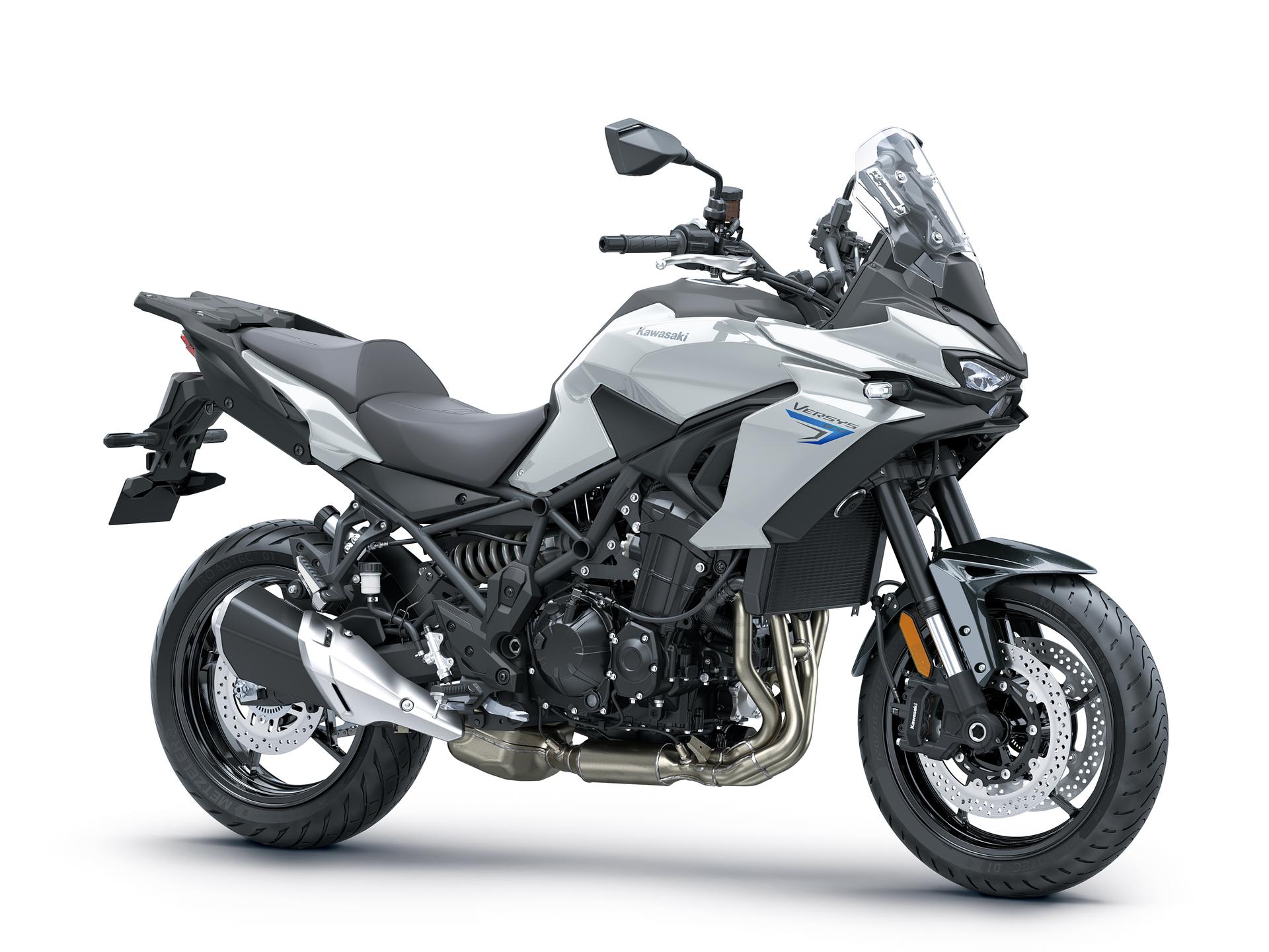
- Pearl Robotic White
Inpage Navigation Section: Gallery
Inpage Navigation Section: Features & Specs
- Features
- Technologies
Fun To Ride: Versatility Meets Sporty Performance
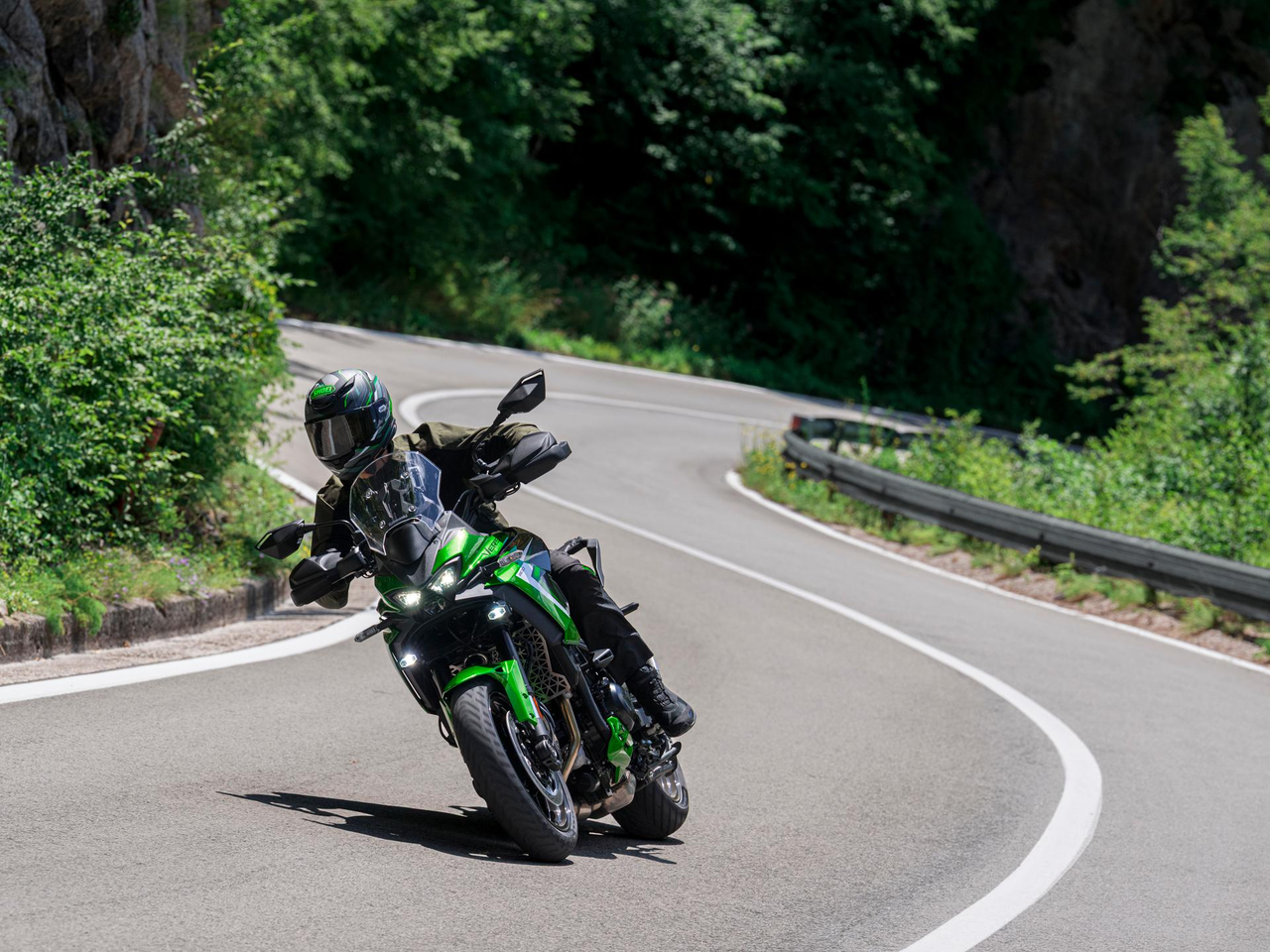
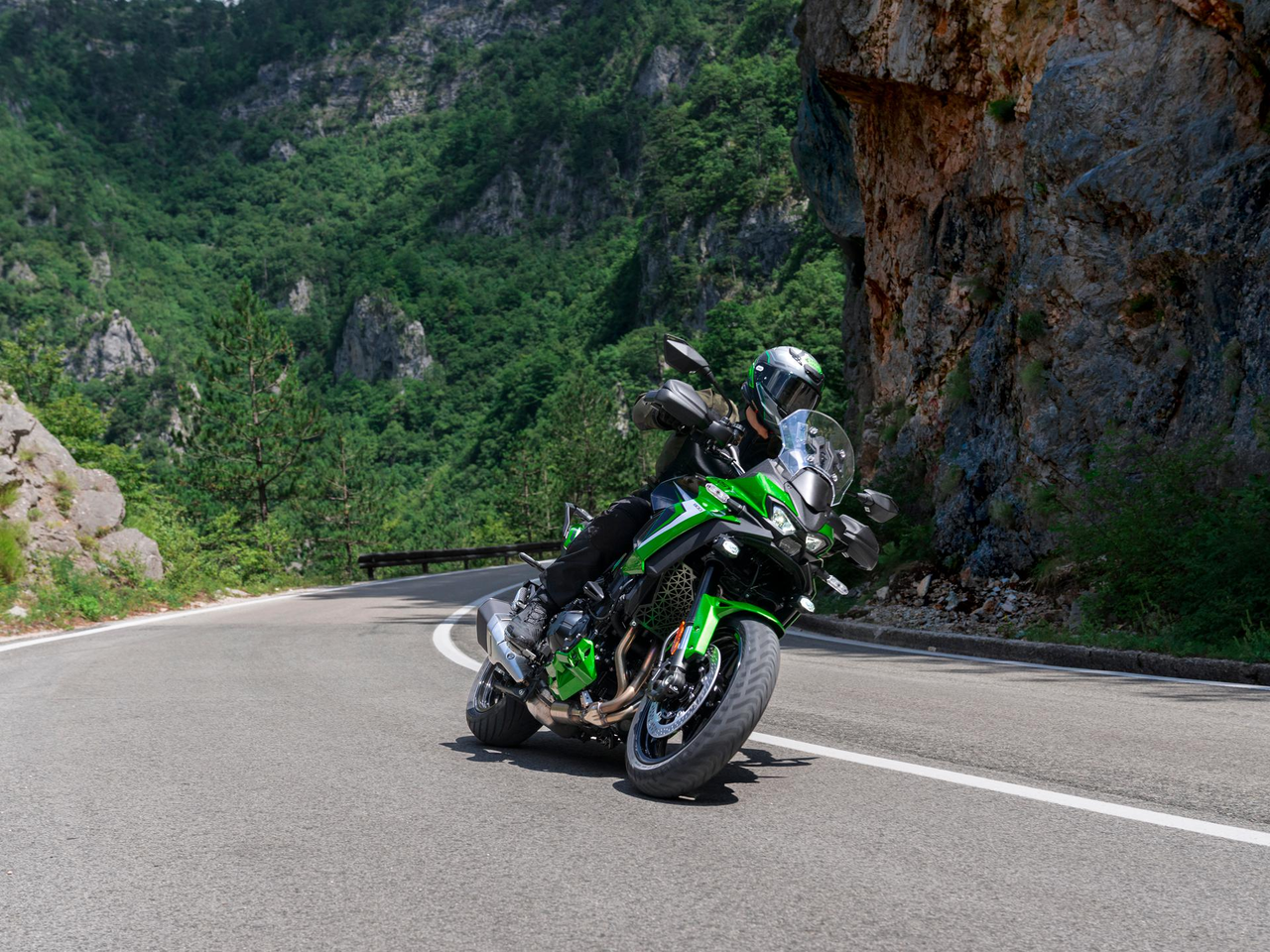
The Versys 900 is a new sporty multi-purpose model that combines versatile capability with the street excitement of an In-Line Four engine. Its all-new steel trellis frame delivers both high-speed stability with or without a passenger and luggage and sporty handling, while chassis geometry developed to achieve a 50:50 front-to-rear weight distribution, together with long-travel suspension and 17” wheels front and rear, offers the freedom to enjoy everything from comfortable cruising to spirited sport riding across a wide variety of on-road situations.
Fun To Ride: Versatility Meets Sporty Performance
The Versys 900 is a new sporty multi-purpose model that combines versatile capability with the street excitement of an In-Line Four engine. Its all-new steel trellis frame delivers both high-speed stability with or without a passenger and luggage and sporty handling, while chassis geometry developed to achieve a 50:50 front-to-rear weight distribution, together with long-travel suspension and 17” wheels front and rear, offers the freedom to enjoy everything from comfortable cruising to spirited sport riding across a wide variety of on-road situations.
Touring Comfort and Touring Tech
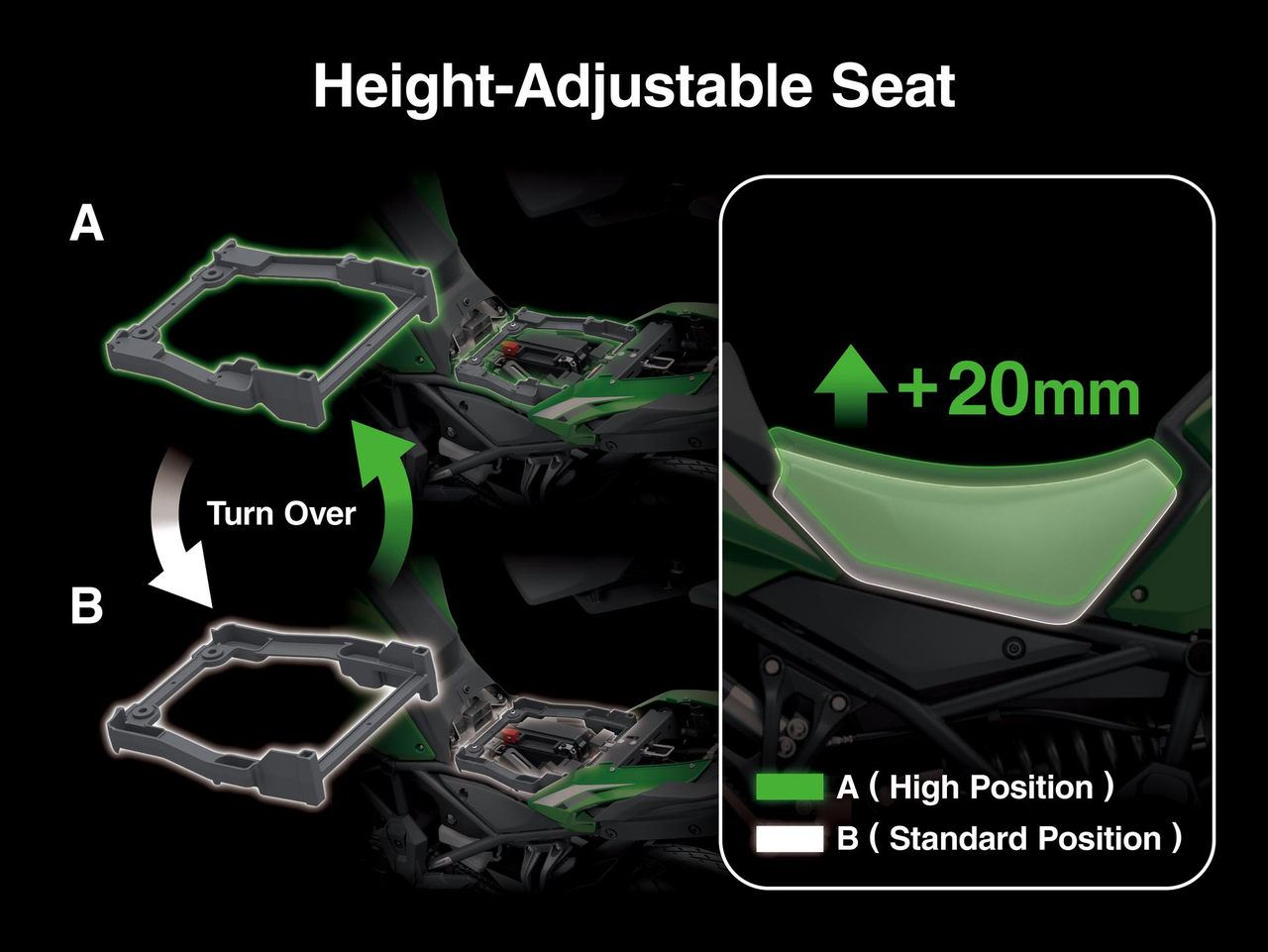
An upright riding position, a height-adjustable seat, a fuel tank shape designed to facilitate reach to the ground, and a windshield that balances sporty styling with wind protection all contribute to the comfort and controllability required for long-distance touring. Advanced technologies including ARAS, ESS, and a 5” TFT full-colour instrumentation system with Turn-by-Turn Navigation display further enhance convenience during cruising.
Touring Comfort and Touring Tech
An upright riding position, a height-adjustable seat, a fuel tank shape designed to facilitate reach to the ground, and a windshield that balances sporty styling with wind protection all contribute to the comfort and controllability required for long-distance touring. Advanced technologies including ARAS, ESS, and a 5” TFT full-colour instrumentation system with Turn-by-Turn Navigation display further enhance convenience during cruising.
Sporty, Flowing Design
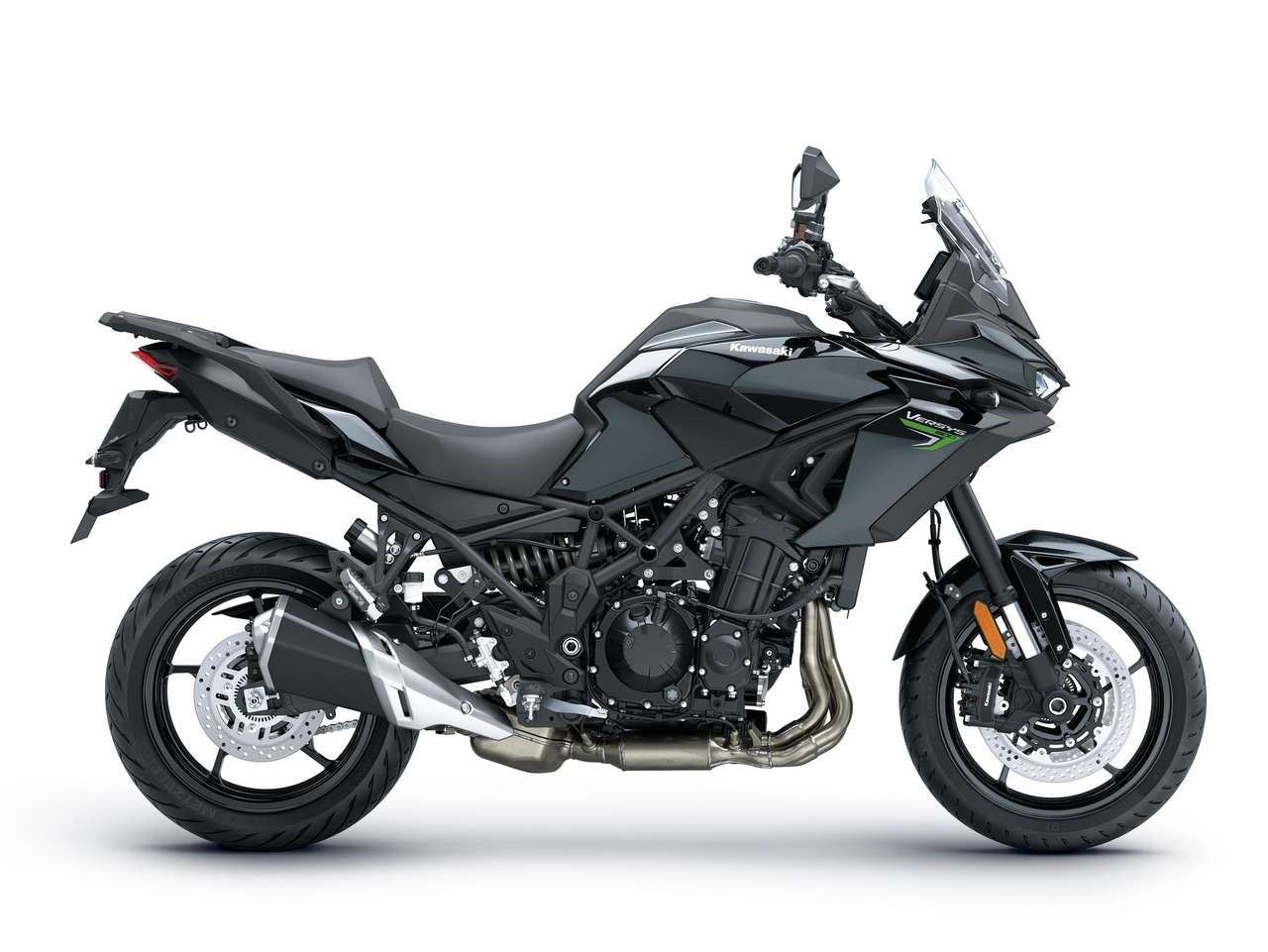
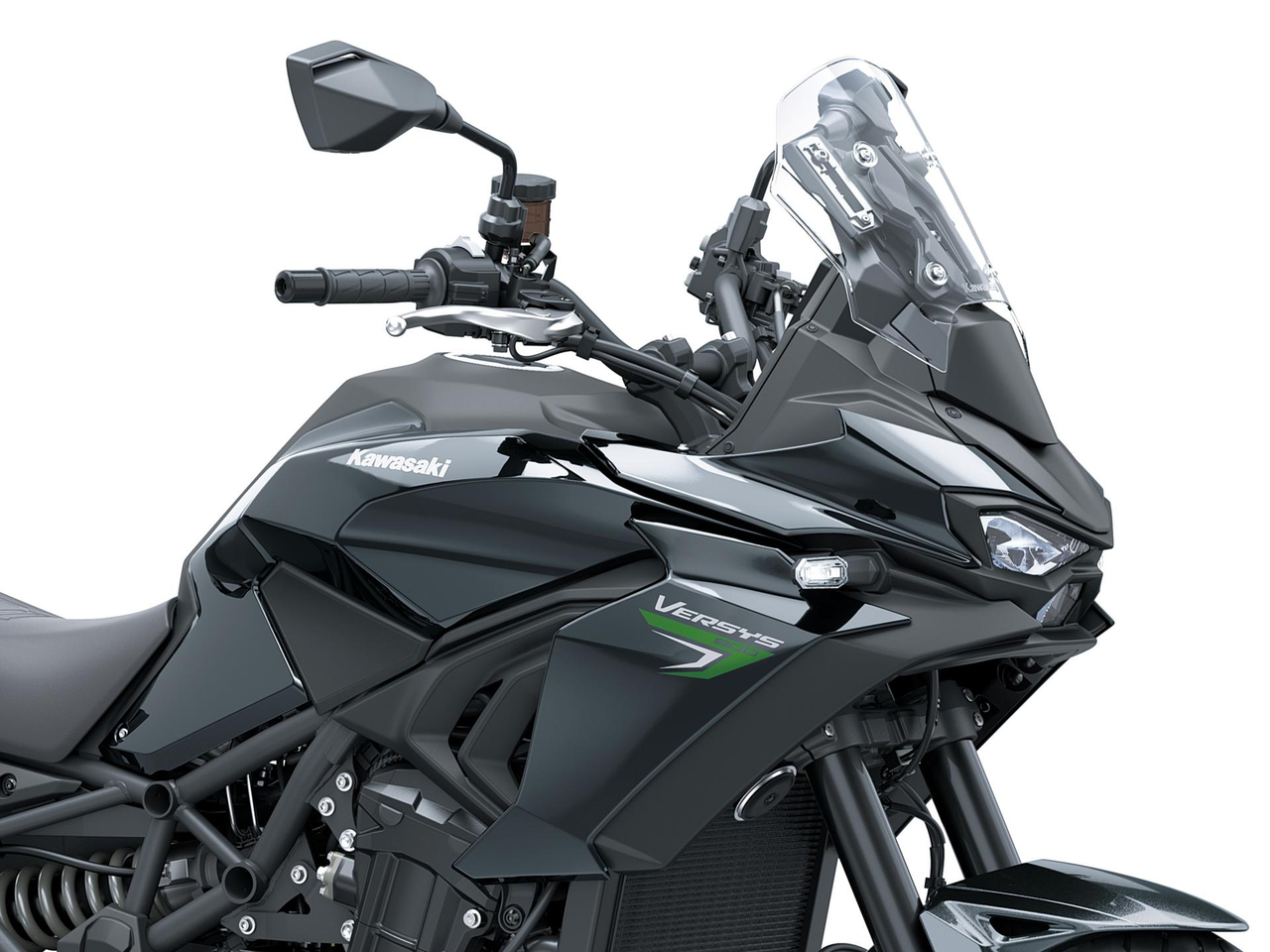
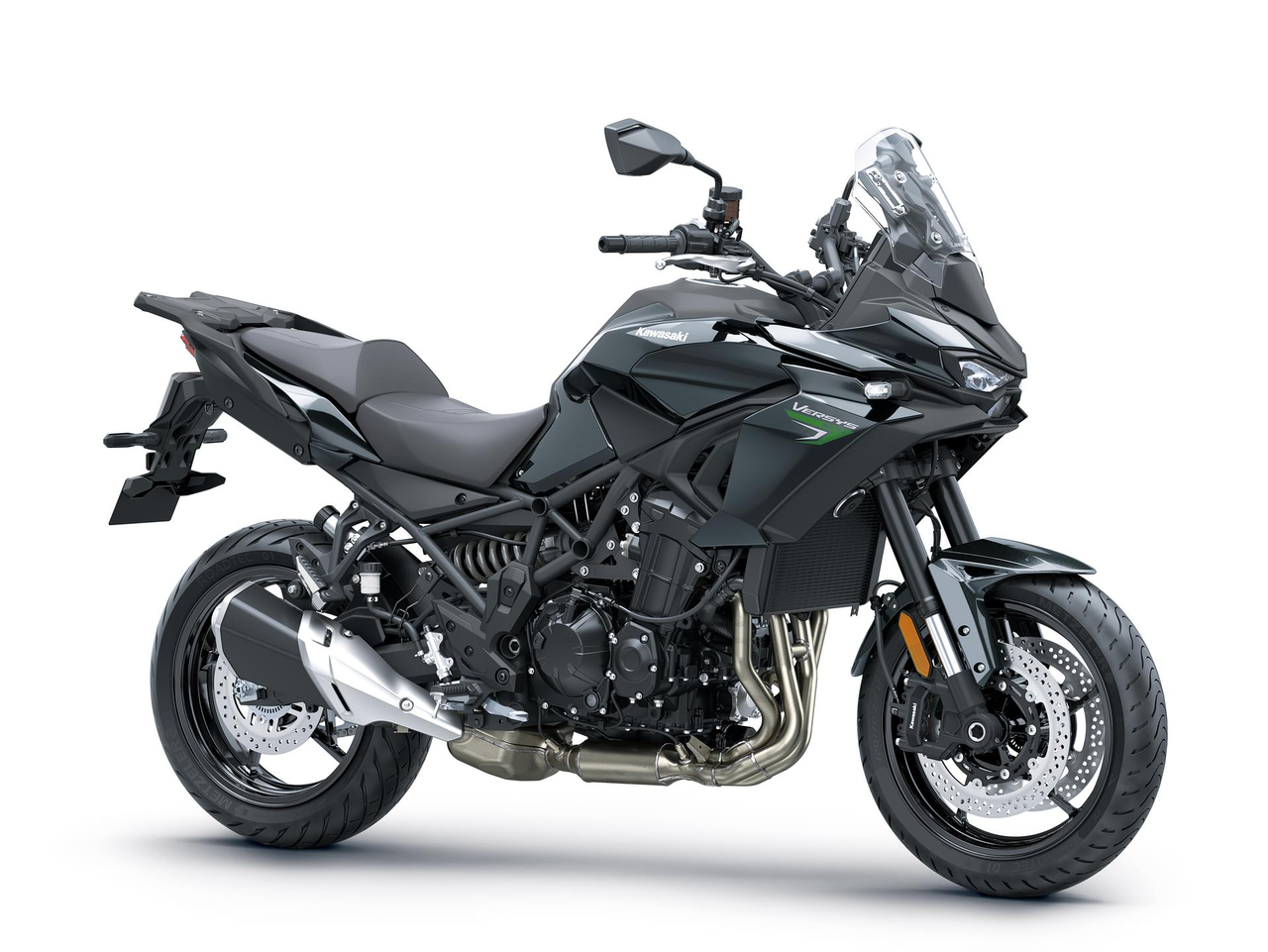
The next-generation Versys design was developed to visually express not only the versatile capability that has long defined the Versys family, but also the sporty character offered by its exhilarating In-Line Four engine and light, agile chassis. With bodywork sculpted to suggest airflow, floating design elements, and well-balanced front-rear proportions, the Versys 900 projects a distinctive presence as a sporty multi-purpose model, setting it apart from conventional adventure-style motorcycles.
Sporty, Flowing Design
The next-generation Versys design was developed to visually express not only the versatile capability that has long defined the Versys family, but also the sporty character offered by its exhilarating In-Line Four engine and light, agile chassis. With bodywork sculpted to suggest airflow, floating design elements, and well-balanced front-rear proportions, the Versys 900 projects a distinctive presence as a sporty multi-purpose model, setting it apart from conventional adventure-style motorcycles.
All-New Steel Trellis Frame
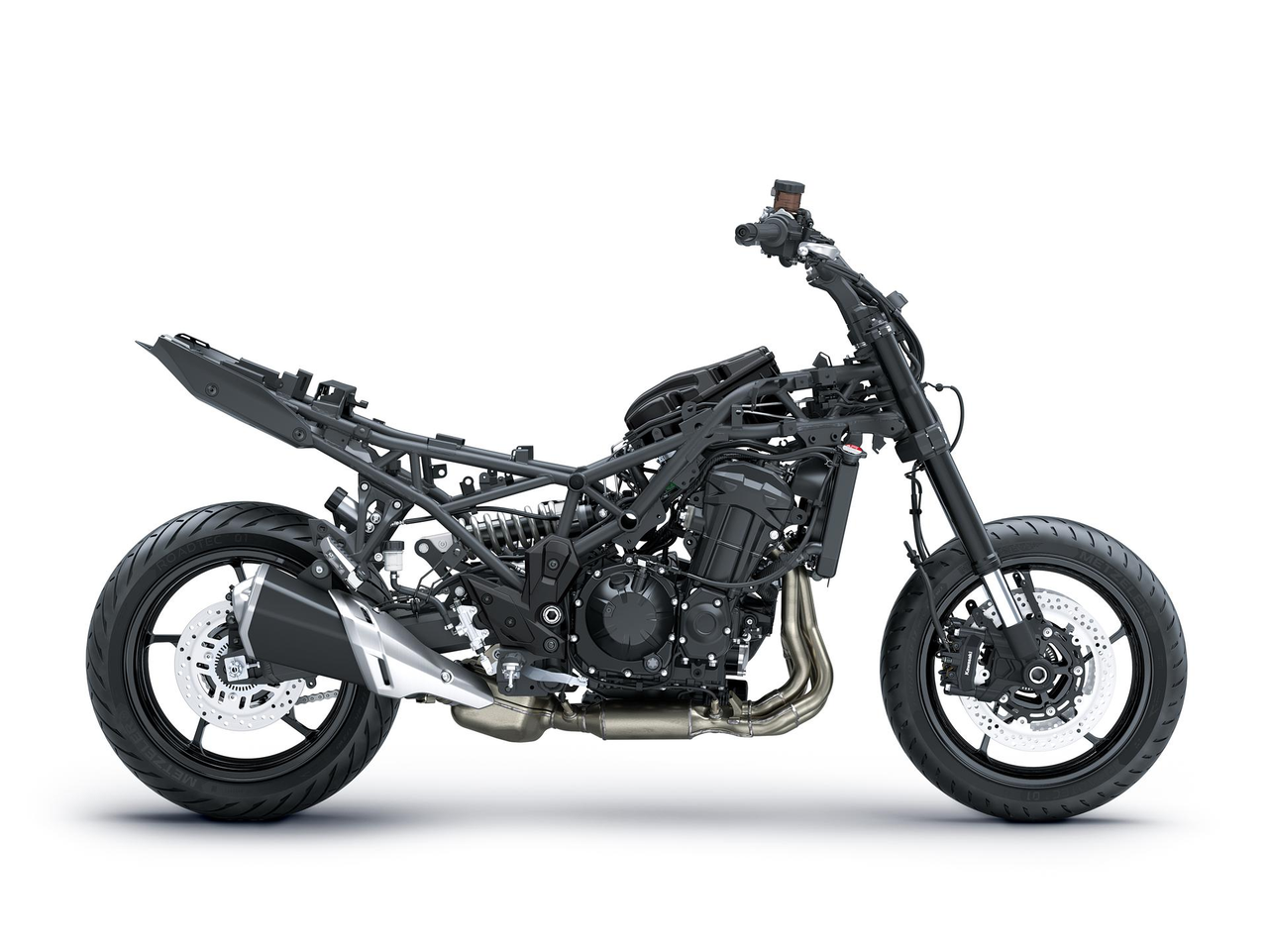
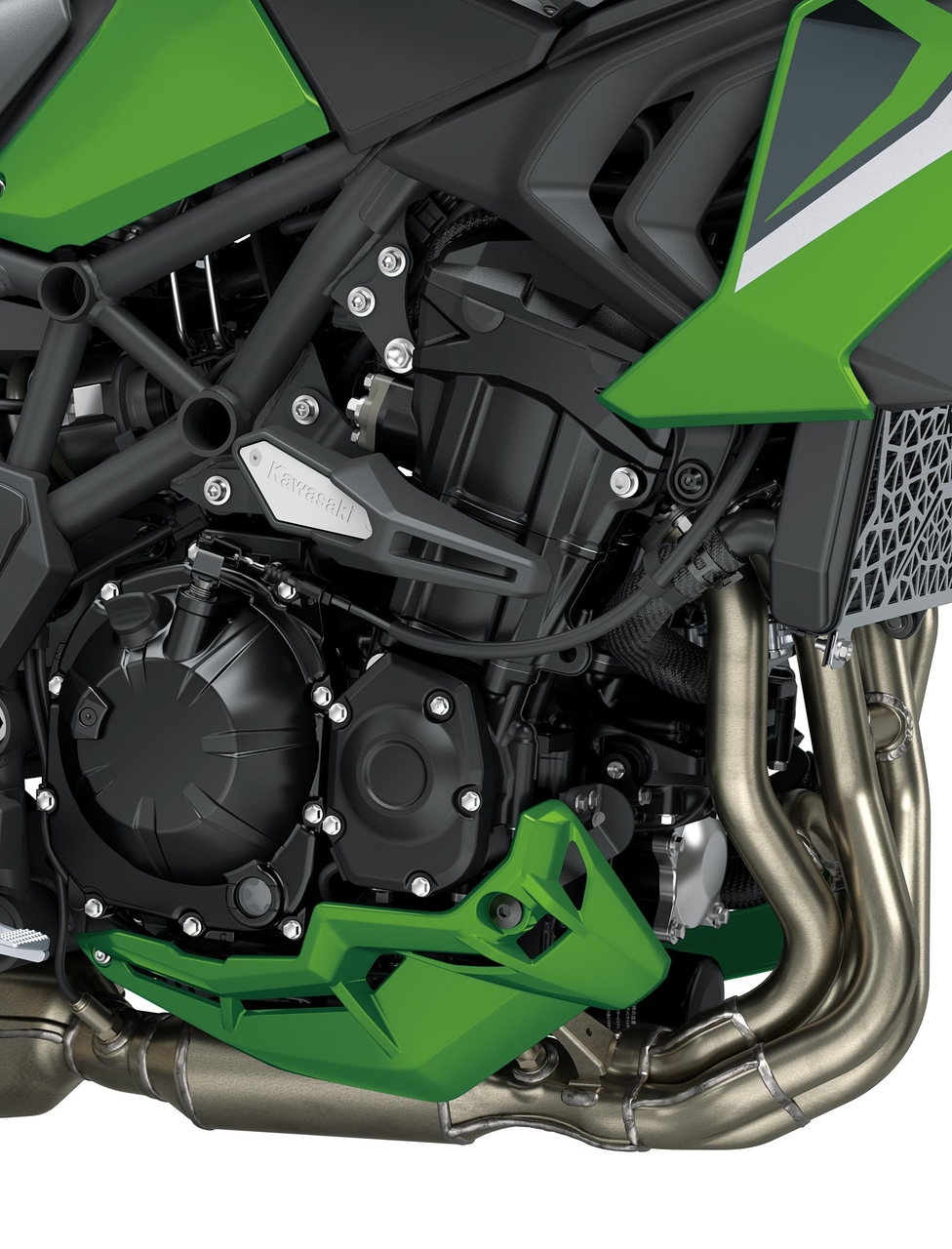
Designed to offer light, agile handling, comfort and stability, the Versys 900 features an all-new steel trellis frame. Developed using Kawasaki’s advanced dynamic analysis, the frame’s balance of rigidity and flexibility delivers a planted feel, light and agile cornering performance, and a three-bag capable rear frame that contributes to composed chassis behaviour when carrying a passenger and luggage.
All-New Steel Trellis Frame
Designed to offer light, agile handling, comfort and stability, the Versys 900 features an all-new steel trellis frame. Developed using Kawasaki’s advanced dynamic analysis, the frame’s balance of rigidity and flexibility delivers a planted feel, light and agile cornering performance, and a three-bag capable rear frame that contributes to composed chassis behaviour when carrying a passenger and luggage.
Sporty Chassis Geometry
To achieve both agile handling worthy of a sporty multipurpose model and a high level of riding stability, the chassis was developed around a 50:50 front-to-rear weight distribution. Geometry that places emphasis on being able to load the front wheel contributes to light, direct handling, and chassis behaviour that responds to the rider’s inputs, complementing the exhilarating performance of the In-Line Four engine across a wide range of riding situations.
Sporty Chassis Geometry
To achieve both agile handling worthy of a sporty multipurpose model and a high level of riding stability, the chassis was developed around a 50:50 front-to-rear weight distribution. Geometry that places emphasis on being able to load the front wheel contributes to light, direct handling, and chassis behaviour that responds to the rider’s inputs, complementing the exhilarating performance of the In-Line Four engine across a wide range of riding situations.
In-Line Four Engine Tuned for Sporty Versatility
Inspired by Kawasaki’s Supernaked Z models, the 948 cm3 liquid-cooled, 4-stroke In-Line Four engine delivers a substantial output (89.6 kW (122 PS)). Intake and exhaust system settings developed with multi-purpose performance in mind contribute to strong, smooth torque characteristics at low and medium engine speeds, offering controllability in everyday riding, while a linear and direct response at higher engine speeds provides an exhilarating acceleration feel. Long final gearing contributes to comfort during highway riding.
In-Line Four Engine Tuned for Sporty Versatility
Inspired by Kawasaki’s Supernaked Z models, the 948 cm3 liquid-cooled, 4-stroke In-Line Four engine delivers a substantial output (89.6 kW (122 PS)). Intake and exhaust system settings developed with multi-purpose performance in mind contribute to strong, smooth torque characteristics at low and medium engine speeds, offering controllability in everyday riding, while a linear and direct response at higher engine speeds provides an exhilarating acceleration feel. Long final gearing contributes to comfort during highway riding.
Long-Travel Suspension and Sporty 17” Wheels
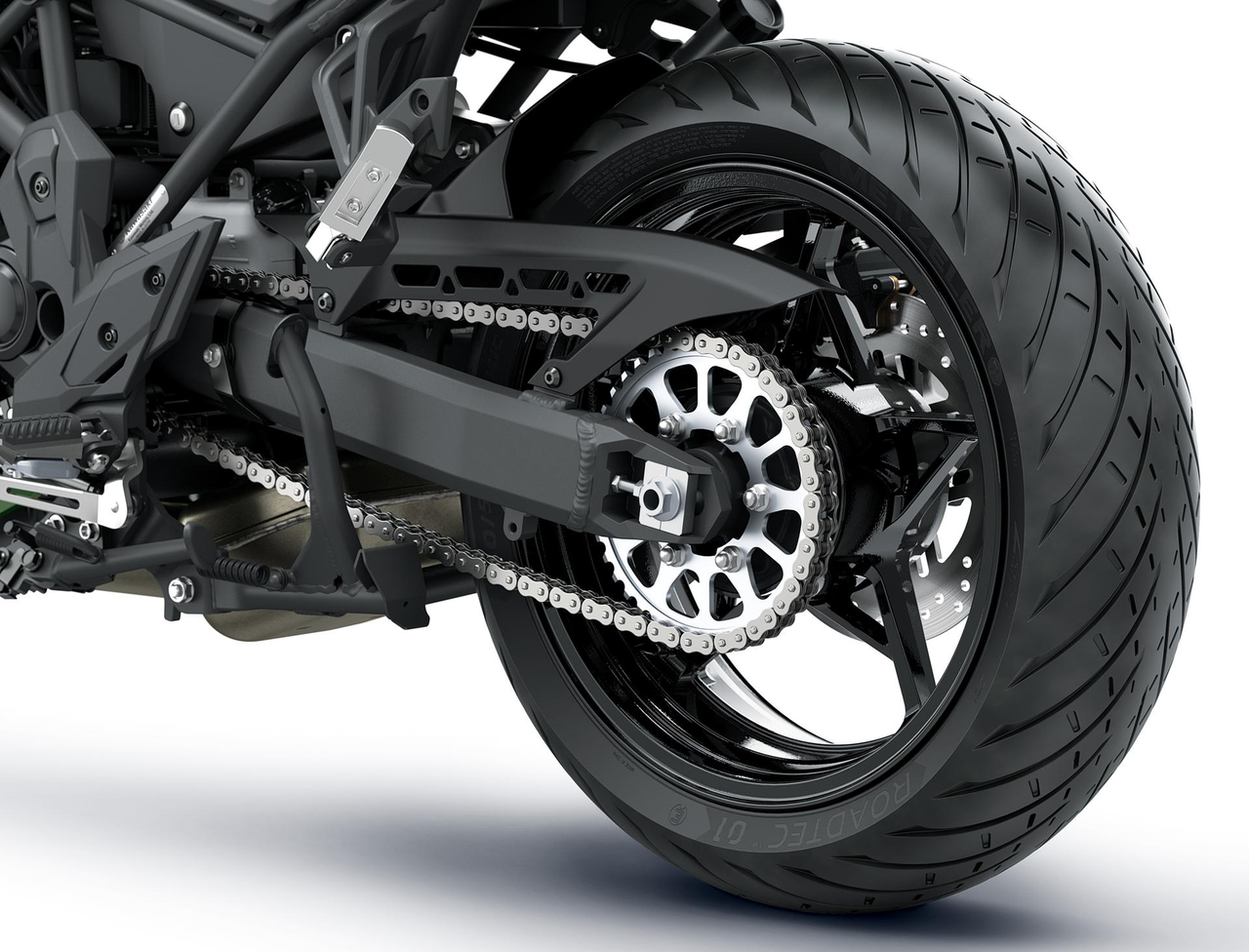
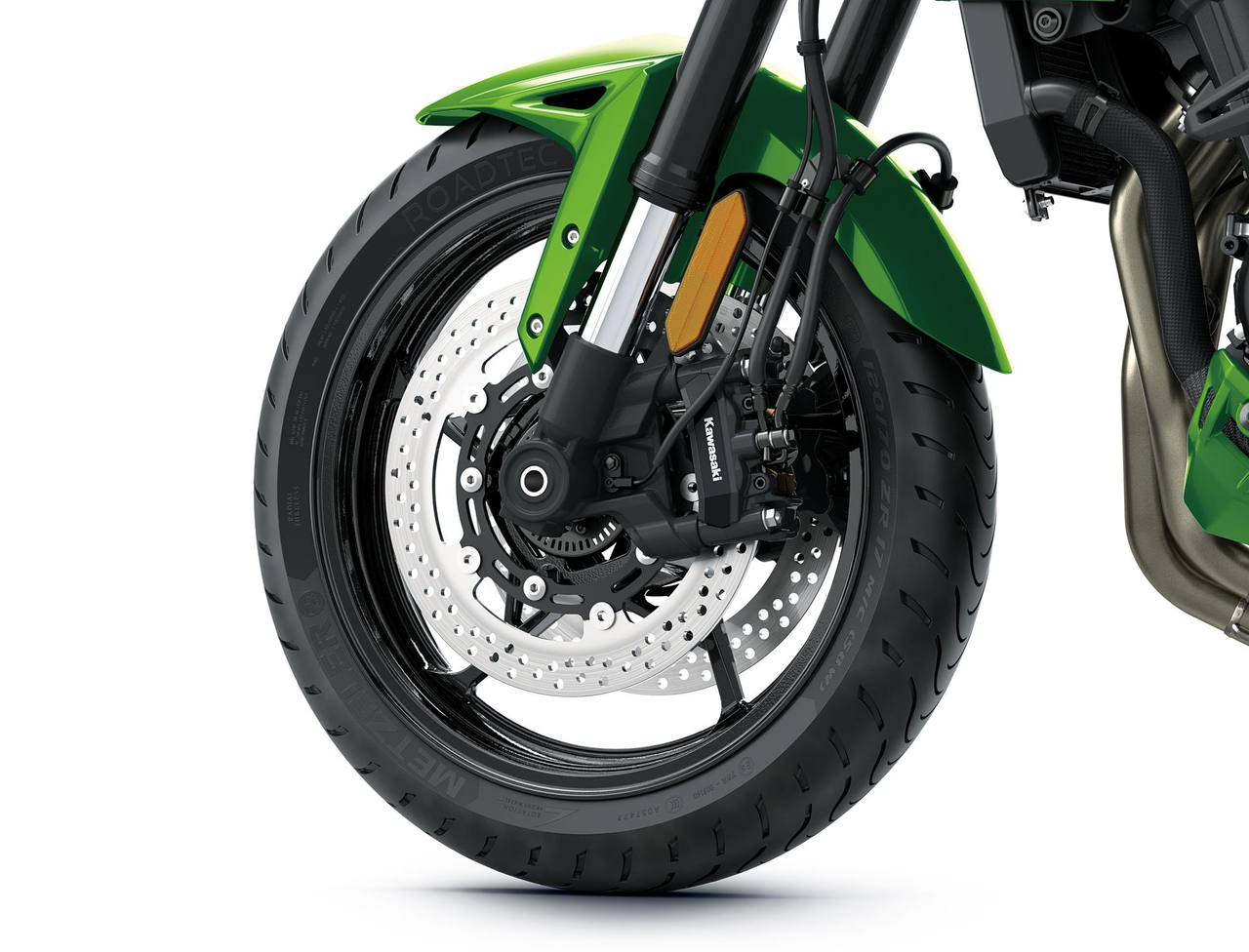
Long-travel suspension front and rear offers a high level of road-following ability and shock absorption, helping to maintain a planted feel even on uneven road surfaces and roads with frequent surface changes. Combined with 17” wheels front and rear, the chassis delivers light, direct handling.
Long-Travel Suspension and Sporty 17” Wheels
Long-travel suspension front and rear offers a high level of road-following ability and shock absorption, helping to maintain a planted feel even on uneven road surfaces and roads with frequent surface changes. Combined with 17” wheels front and rear, the chassis delivers light, direct handling.
IMU-Equipped Electronic Riding Support Technology
Kawasaki’s highly sophisticated electronic management systems offer rider support to allow riders to more fully enjoy the Versys 900’s light handling and exhilarating performance across a wide variety of onroad situations. IMU feedback adds greater precision to the ABS.
IMU-Equipped Electronic Riding Support Technology
Kawasaki’s highly sophisticated electronic management systems offer rider support to allow riders to more fully enjoy the Versys 900’s light handling and exhilarating performance across a wide variety of onroad situations. IMU feedback adds greater precision to the ABS.
Advanced Touring Support Technology: ARAS & ESS
Advanced Rider Assistance Systems (ARAS) and Emergency Stop Signal (ESS) make their debut on a Versys model. Together, they offer rider support across a wide variety of on-road situations, from everyday riding to long-distance touring.
Advanced Touring Support Technology: ARAS & ESS
Advanced Rider Assistance Systems (ARAS) and Emergency Stop Signal (ESS) make their debut on a Versys model. Together, they offer rider support across a wide variety of on-road situations, from everyday riding to long-distance touring.
Rider Comfort for Confident Long-Distance Riding
An upright riding position and carefully considered ergonomics contribute to rider comfort during long hours in the saddle. The height-adjustable seat offers greater freedom of movement while optimised urethane firmness helps reduce fatigue on extended rides. A fuel tank shape designed to facilitate reach to the ground, together with a windshield that balances sporty styling and wind protection, contributes to comfortable cruising performance and a high level of controllability.
Rider Comfort for Confident Long-Distance Riding
An upright riding position and carefully considered ergonomics contribute to rider comfort during long hours in the saddle. The height-adjustable seat offers greater freedom of movement while optimised urethane firmness helps reduce fatigue on extended rides. A fuel tank shape designed to facilitate reach to the ground, together with a windshield that balances sporty styling and wind protection, contributes to comfortable cruising performance and a high level of controllability.
Sport-Focused Top Case & Pannier System
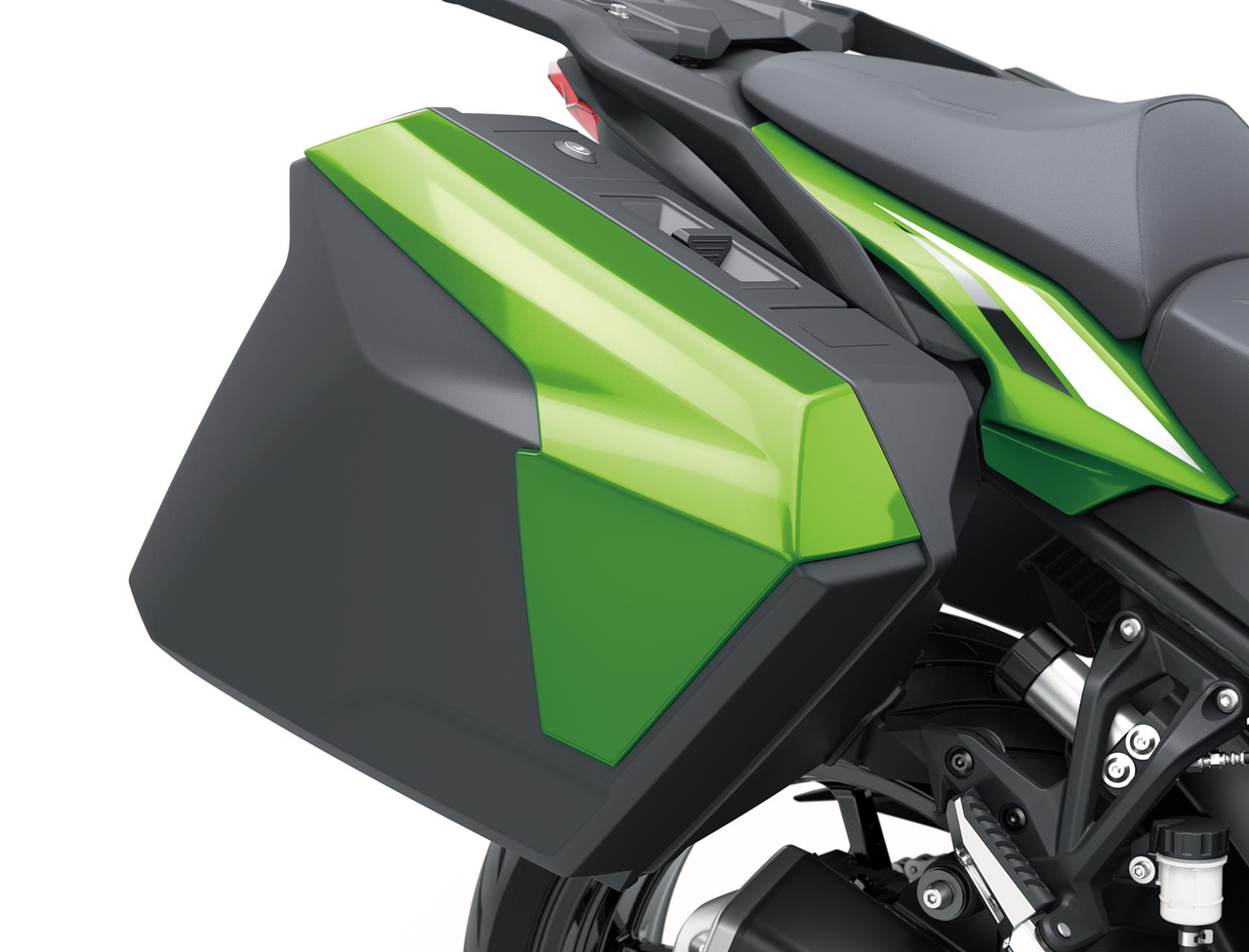
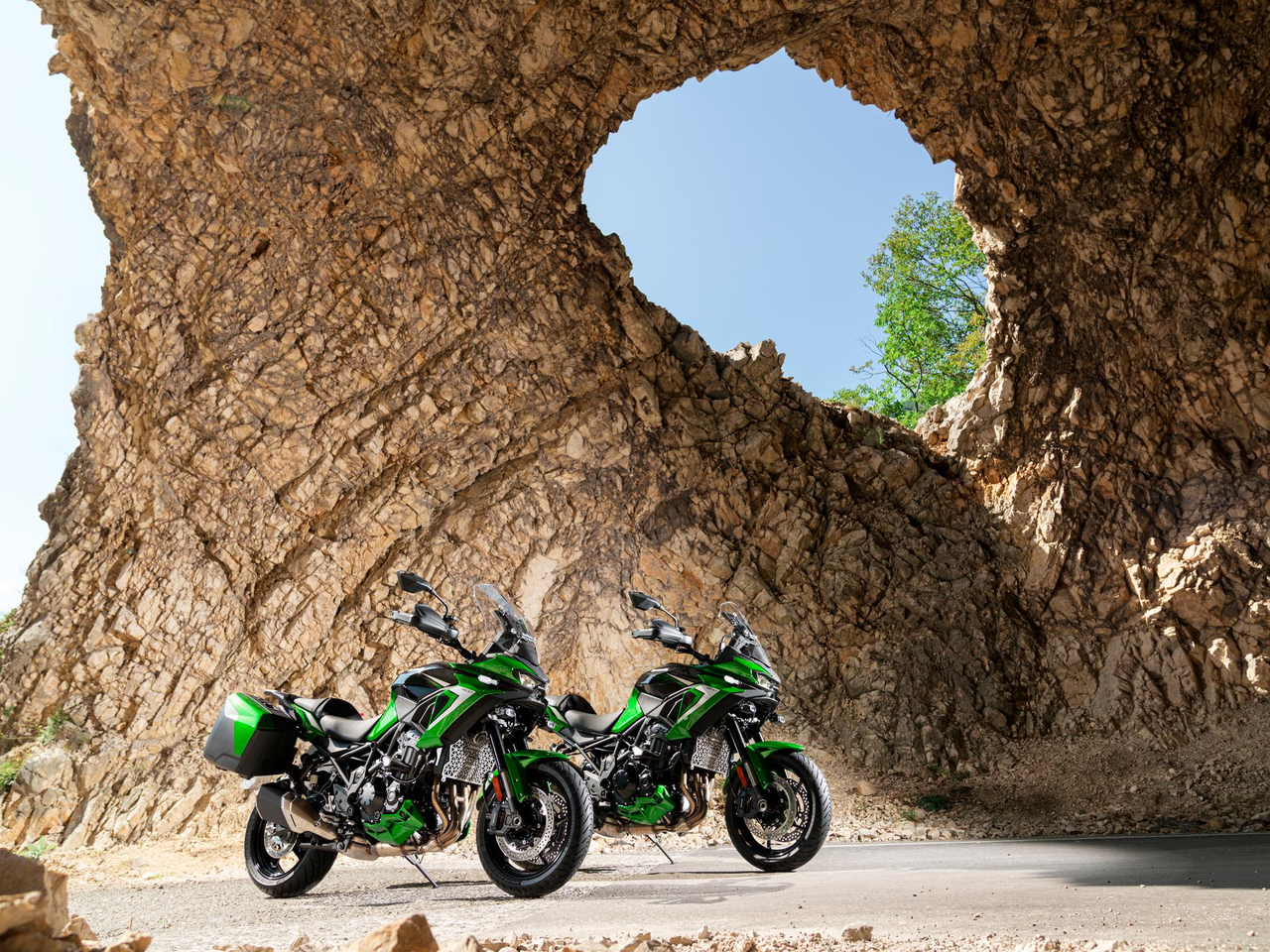
The Versys 900 can accommodate a top case and panniers at the same time. The specially designed mounting system offers easy mounting/removal and includes dampers that contribute to the Versys 900’s high level of riding stability even when fully loaded. The cases were also styled to complement the motorcycle’s Aero Edge concept, helping to maintain the machine’s light and agile appearance when equipped for touring.
Sport-Focused Top Case & Pannier System
The Versys 900 can accommodate a top case and panniers at the same time. The specially designed mounting system offers easy mounting/removal and includes dampers that contribute to the Versys 900’s high level of riding stability even when fully loaded. The cases were also styled to complement the motorcycle’s Aero Edge concept, helping to maintain the machine’s light and agile appearance when equipped for touring.
Well-Balanced Proportions
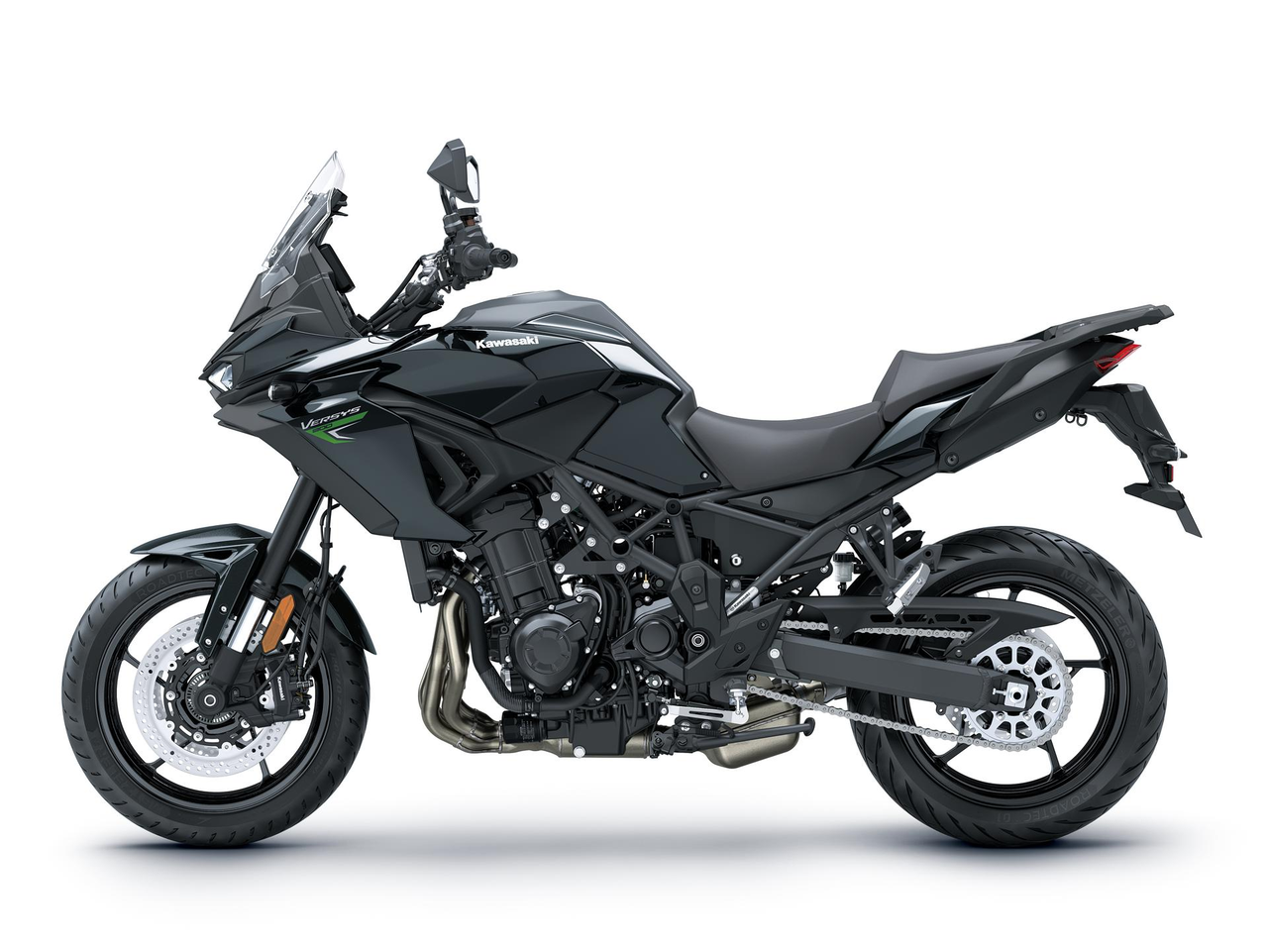
The Versys 900’s well-balanced proportions create visual harmony from the front of the machine to its tail. A visual representation of the Versys 900’s 50:50 front-rear balance, the design reinforces the Versys 900’s light, sporty image while suggesting an approachable, rider-friendly nature.
Well-Balanced Proportions
The Versys 900’s well-balanced proportions create visual harmony from the front of the machine to its tail. A visual representation of the Versys 900’s 50:50 front-rear balance, the design reinforces the Versys 900’s light, sporty image while suggesting an approachable, rider-friendly nature.
5” TFT Instrumentation
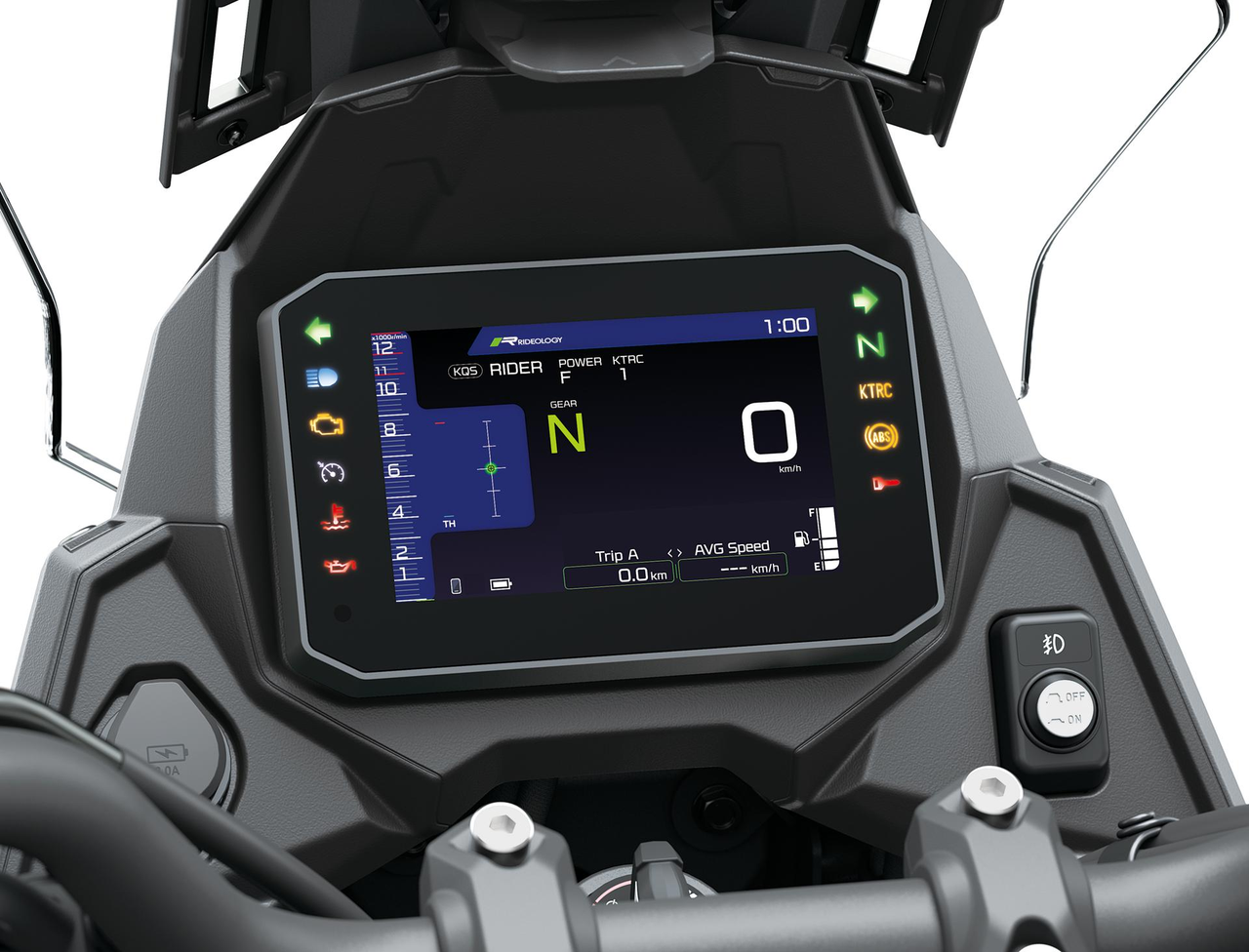
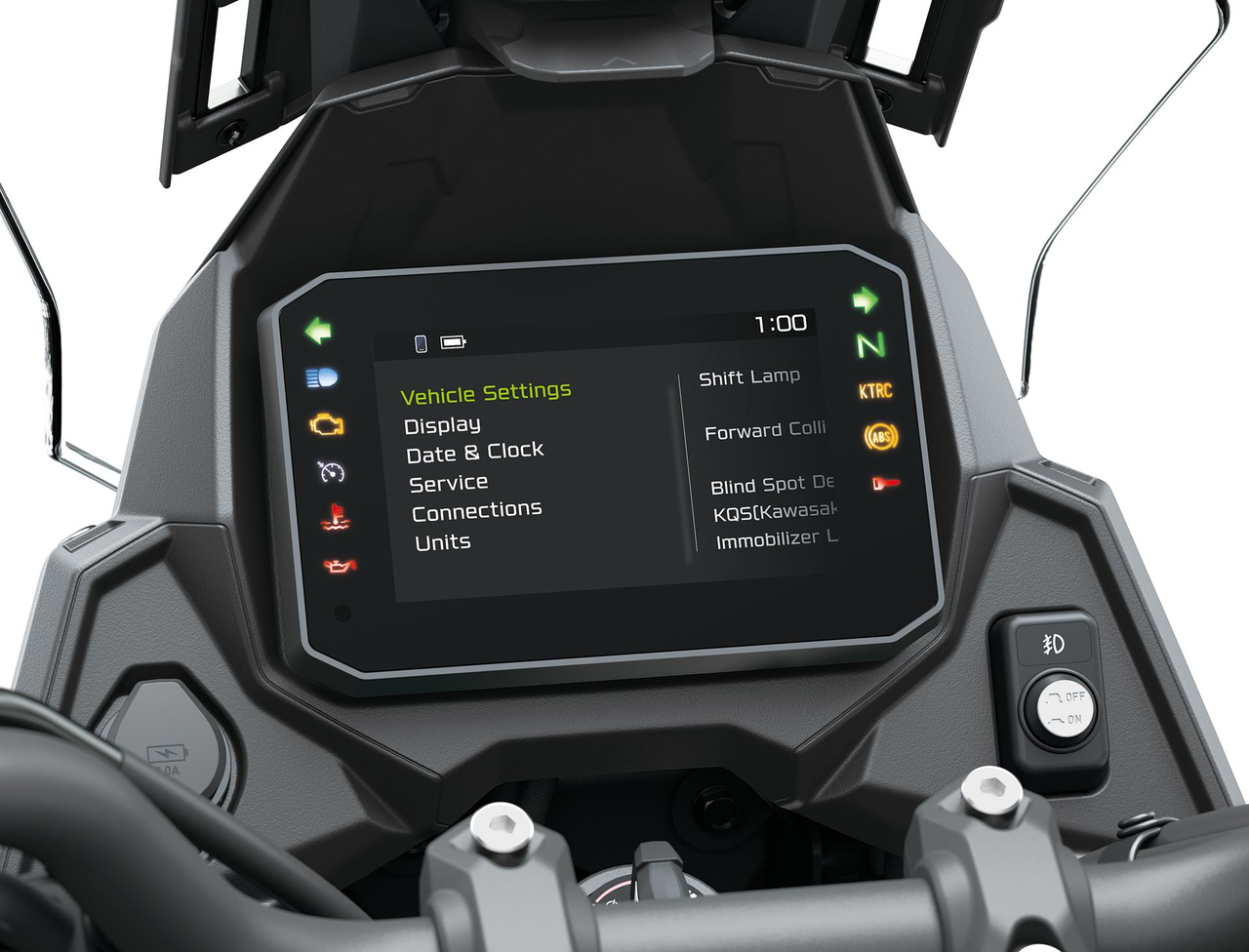
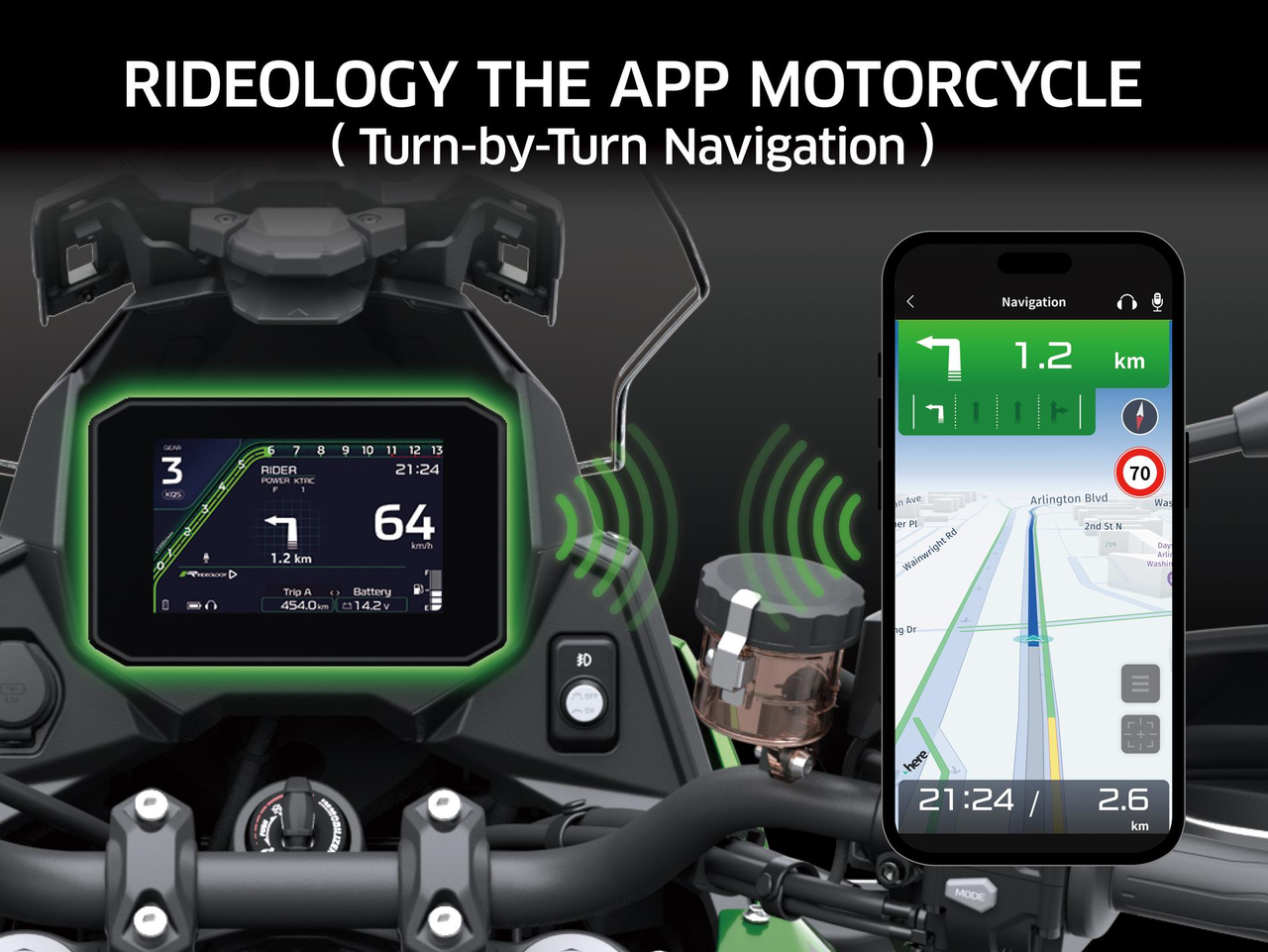
The 5” TFT full-colour instrumentation combines information visibility suited to touring with a display design that highlights the exhilarating character of the In-Line Four engine. In addition to visually emphasizing engine speed as revs rise, it supports Turn-by-Turn Navigation display. Riders can choose between two display layouts according to their preferences and riding needs: Type 1, which emphasises the excitement of the engine, and Type 2, which prioritises the visibility of navigation and vehicle information.
5” TFT Instrumentation
The 5” TFT full-colour instrumentation combines information visibility suited to touring with a display design that highlights the exhilarating character of the In-Line Four engine. In addition to visually emphasizing engine speed as revs rise, it supports Turn-by-Turn Navigation display. Riders can choose between two display layouts according to their preferences and riding needs: Type 1, which emphasises the excitement of the engine, and Type 2, which prioritises the visibility of navigation and vehicle information.
RIDEOLOGY THE APP MOTORCYCLE with Voice Command and Turn-by-Turn Navigation
Smartphone connectivity via RIDEOLOGY THE APP MOTORCYCLE enhances riding enjoyment by giving riders access to a range of useful functions for everything from everyday riding to touring. Turn-by-Turn Navigation can be displayed directly on the instrumentation, allowing riders to intuitively confirm their route direction. Voice Command functionality further enhances convenience by enabling hands-free operation of various functions.
RIDEOLOGY THE APP MOTORCYCLE with Voice Command and Turn-by-Turn Navigation
Smartphone connectivity via RIDEOLOGY THE APP MOTORCYCLE enhances riding enjoyment by giving riders access to a range of useful functions for everything from everyday riding to touring. Turn-by-Turn Navigation can be displayed directly on the instrumentation, allowing riders to intuitively confirm their route direction. Voice Command functionality further enhances convenience by enabling hands-free operation of various functions.
Aero Edge Concept
Conjuring an image of effortlessly following the curves of the road, the Versys 900’s Aero Edge concept embodies the fusion of the Versys series’ versatility and the excitement of Kawasaki’s 900cc-class In-Line Four engine. Smooth, flowing lines extend from the front face to the elevated rear, while layered bodywork that suggests airflow and floating design elements positioned throughout the machine express the Versys 900’s sporty, light and agile character.
Aero Edge Concept
Conjuring an image of effortlessly following the curves of the road, the Versys 900’s Aero Edge concept embodies the fusion of the Versys series’ versatility and the excitement of Kawasaki’s 900cc-class In-Line Four engine. Smooth, flowing lines extend from the front face to the elevated rear, while layered bodywork that suggests airflow and floating design elements positioned throughout the machine express the Versys 900’s sporty, light and agile character.
- Fun To Ride: Versatility Meets Sporty Performance
- Touring Comfort and Touring Tech
- Sporty, Flowing Design
- All-New Steel Trellis Frame
- Sporty Chassis Geometry
- In-Line Four Engine Tuned for Sporty Versatility
- Long-Travel Suspension and Sporty 17” Wheels
- IMU-Equipped Electronic Riding Support Technology
- Advanced Touring Support Technology: ARAS & ESS
- Rider Comfort for Confident Long-Distance Riding
- Sport-Focused Top Case & Pannier System
- Well-Balanced Proportions
- 5” TFT Instrumentation
- RIDEOLOGY THE APP MOTORCYCLE with Voice Command and Turn-by-Turn Navigation
- Aero Edge Concept
Fun To Ride: Versatility Meets Sporty Performance
The Versys 900 is a new sporty multi-purpose model that combines versatile capability with the street excitement of an In-Line Four engine. Its all-new steel trellis frame delivers both high-speed stability with or without a passenger and luggage and sporty handling, while chassis geometry developed to achieve a 50:50 front-to-rear weight distribution, together with long-travel suspension and 17” wheels front and rear, offers the freedom to enjoy everything from comfortable cruising to spirited sport riding across a wide variety of on-road situations.
Fun To Ride: Versatility Meets Sporty Performance
The Versys 900 is a new sporty multi-purpose model that combines versatile capability with the street excitement of an In-Line Four engine. Its all-new steel trellis frame delivers both high-speed stability with or without a passenger and luggage and sporty handling, while chassis geometry developed to achieve a 50:50 front-to-rear weight distribution, together with long-travel suspension and 17” wheels front and rear, offers the freedom to enjoy everything from comfortable cruising to spirited sport riding across a wide variety of on-road situations.
Touring Comfort and Touring Tech
An upright riding position, a height-adjustable seat, a fuel tank shape designed to facilitate reach to the ground, and a windshield that balances sporty styling with wind protection all contribute to the comfort and controllability required for long-distance touring. Advanced technologies including ARAS, ESS, and a 5” TFT full-colour instrumentation system with Turn-by-Turn Navigation display further enhance convenience during cruising.
Touring Comfort and Touring Tech
An upright riding position, a height-adjustable seat, a fuel tank shape designed to facilitate reach to the ground, and a windshield that balances sporty styling with wind protection all contribute to the comfort and controllability required for long-distance touring. Advanced technologies including ARAS, ESS, and a 5” TFT full-colour instrumentation system with Turn-by-Turn Navigation display further enhance convenience during cruising.
Sporty, Flowing Design
The next-generation Versys design was developed to visually express not only the versatile capability that has long defined the Versys family, but also the sporty character offered by its exhilarating In-Line Four engine and light, agile chassis. With bodywork sculpted to suggest airflow, floating design elements, and well-balanced front-rear proportions, the Versys 900 projects a distinctive presence as a sporty multi-purpose model, setting it apart from conventional adventure-style motorcycles.
Sporty, Flowing Design
The next-generation Versys design was developed to visually express not only the versatile capability that has long defined the Versys family, but also the sporty character offered by its exhilarating In-Line Four engine and light, agile chassis. With bodywork sculpted to suggest airflow, floating design elements, and well-balanced front-rear proportions, the Versys 900 projects a distinctive presence as a sporty multi-purpose model, setting it apart from conventional adventure-style motorcycles.
All-New Steel Trellis Frame
Designed to offer light, agile handling, comfort and stability, the Versys 900 features an all-new steel trellis frame. Developed using Kawasaki’s advanced dynamic analysis, the frame’s balance of rigidity and flexibility delivers a planted feel, light and agile cornering performance, and a three-bag capable rear frame that contributes to composed chassis behaviour when carrying a passenger and luggage.
All-New Steel Trellis Frame
Designed to offer light, agile handling, comfort and stability, the Versys 900 features an all-new steel trellis frame. Developed using Kawasaki’s advanced dynamic analysis, the frame’s balance of rigidity and flexibility delivers a planted feel, light and agile cornering performance, and a three-bag capable rear frame that contributes to composed chassis behaviour when carrying a passenger and luggage.
Sporty Chassis Geometry
To achieve both agile handling worthy of a sporty multipurpose model and a high level of riding stability, the chassis was developed around a 50:50 front-to-rear weight distribution. Geometry that places emphasis on being able to load the front wheel contributes to light, direct handling, and chassis behaviour that responds to the rider’s inputs, complementing the exhilarating performance of the In-Line Four engine across a wide range of riding situations.
Sporty Chassis Geometry
To achieve both agile handling worthy of a sporty multipurpose model and a high level of riding stability, the chassis was developed around a 50:50 front-to-rear weight distribution. Geometry that places emphasis on being able to load the front wheel contributes to light, direct handling, and chassis behaviour that responds to the rider’s inputs, complementing the exhilarating performance of the In-Line Four engine across a wide range of riding situations.
In-Line Four Engine Tuned for Sporty Versatility
Inspired by Kawasaki’s Supernaked Z models, the 948 cm3 liquid-cooled, 4-stroke In-Line Four engine delivers a substantial output (89.6 kW (122 PS)). Intake and exhaust system settings developed with multi-purpose performance in mind contribute to strong, smooth torque characteristics at low and medium engine speeds, offering controllability in everyday riding, while a linear and direct response at higher engine speeds provides an exhilarating acceleration feel. Long final gearing contributes to comfort during highway riding.
In-Line Four Engine Tuned for Sporty Versatility
Inspired by Kawasaki’s Supernaked Z models, the 948 cm3 liquid-cooled, 4-stroke In-Line Four engine delivers a substantial output (89.6 kW (122 PS)). Intake and exhaust system settings developed with multi-purpose performance in mind contribute to strong, smooth torque characteristics at low and medium engine speeds, offering controllability in everyday riding, while a linear and direct response at higher engine speeds provides an exhilarating acceleration feel. Long final gearing contributes to comfort during highway riding.
Long-Travel Suspension and Sporty 17” Wheels
Long-travel suspension front and rear offers a high level of road-following ability and shock absorption, helping to maintain a planted feel even on uneven road surfaces and roads with frequent surface changes. Combined with 17” wheels front and rear, the chassis delivers light, direct handling.
Long-Travel Suspension and Sporty 17” Wheels
Long-travel suspension front and rear offers a high level of road-following ability and shock absorption, helping to maintain a planted feel even on uneven road surfaces and roads with frequent surface changes. Combined with 17” wheels front and rear, the chassis delivers light, direct handling.
IMU-Equipped Electronic Riding Support Technology
Kawasaki’s highly sophisticated electronic management systems offer rider support to allow riders to more fully enjoy the Versys 900’s light handling and exhilarating performance across a wide variety of onroad situations. IMU feedback adds greater precision to the ABS.
IMU-Equipped Electronic Riding Support Technology
Kawasaki’s highly sophisticated electronic management systems offer rider support to allow riders to more fully enjoy the Versys 900’s light handling and exhilarating performance across a wide variety of onroad situations. IMU feedback adds greater precision to the ABS.
Advanced Touring Support Technology: ARAS & ESS
Advanced Rider Assistance Systems (ARAS) and Emergency Stop Signal (ESS) make their debut on a Versys model. Together, they offer rider support across a wide variety of on-road situations, from everyday riding to long-distance touring.
Advanced Touring Support Technology: ARAS & ESS
Advanced Rider Assistance Systems (ARAS) and Emergency Stop Signal (ESS) make their debut on a Versys model. Together, they offer rider support across a wide variety of on-road situations, from everyday riding to long-distance touring.
Rider Comfort for Confident Long-Distance Riding
An upright riding position and carefully considered ergonomics contribute to rider comfort during long hours in the saddle. The height-adjustable seat offers greater freedom of movement while optimised urethane firmness helps reduce fatigue on extended rides. A fuel tank shape designed to facilitate reach to the ground, together with a windshield that balances sporty styling and wind protection, contributes to comfortable cruising performance and a high level of controllability.
Rider Comfort for Confident Long-Distance Riding
An upright riding position and carefully considered ergonomics contribute to rider comfort during long hours in the saddle. The height-adjustable seat offers greater freedom of movement while optimised urethane firmness helps reduce fatigue on extended rides. A fuel tank shape designed to facilitate reach to the ground, together with a windshield that balances sporty styling and wind protection, contributes to comfortable cruising performance and a high level of controllability.
Sport-Focused Top Case & Pannier System
The Versys 900 can accommodate a top case and panniers at the same time. The specially designed mounting system offers easy mounting/removal and includes dampers that contribute to the Versys 900’s high level of riding stability even when fully loaded. The cases were also styled to complement the motorcycle’s Aero Edge concept, helping to maintain the machine’s light and agile appearance when equipped for touring.
Sport-Focused Top Case & Pannier System
The Versys 900 can accommodate a top case and panniers at the same time. The specially designed mounting system offers easy mounting/removal and includes dampers that contribute to the Versys 900’s high level of riding stability even when fully loaded. The cases were also styled to complement the motorcycle’s Aero Edge concept, helping to maintain the machine’s light and agile appearance when equipped for touring.
Well-Balanced Proportions
The Versys 900’s well-balanced proportions create visual harmony from the front of the machine to its tail. A visual representation of the Versys 900’s 50:50 front-rear balance, the design reinforces the Versys 900’s light, sporty image while suggesting an approachable, rider-friendly nature.
Well-Balanced Proportions
The Versys 900’s well-balanced proportions create visual harmony from the front of the machine to its tail. A visual representation of the Versys 900’s 50:50 front-rear balance, the design reinforces the Versys 900’s light, sporty image while suggesting an approachable, rider-friendly nature.
5” TFT Instrumentation
The 5” TFT full-colour instrumentation combines information visibility suited to touring with a display design that highlights the exhilarating character of the In-Line Four engine. In addition to visually emphasizing engine speed as revs rise, it supports Turn-by-Turn Navigation display. Riders can choose between two display layouts according to their preferences and riding needs: Type 1, which emphasises the excitement of the engine, and Type 2, which prioritises the visibility of navigation and vehicle information.
5” TFT Instrumentation
The 5” TFT full-colour instrumentation combines information visibility suited to touring with a display design that highlights the exhilarating character of the In-Line Four engine. In addition to visually emphasizing engine speed as revs rise, it supports Turn-by-Turn Navigation display. Riders can choose between two display layouts according to their preferences and riding needs: Type 1, which emphasises the excitement of the engine, and Type 2, which prioritises the visibility of navigation and vehicle information.
RIDEOLOGY THE APP MOTORCYCLE with Voice Command and Turn-by-Turn Navigation
Smartphone connectivity via RIDEOLOGY THE APP MOTORCYCLE enhances riding enjoyment by giving riders access to a range of useful functions for everything from everyday riding to touring. Turn-by-Turn Navigation can be displayed directly on the instrumentation, allowing riders to intuitively confirm their route direction. Voice Command functionality further enhances convenience by enabling hands-free operation of various functions.
RIDEOLOGY THE APP MOTORCYCLE with Voice Command and Turn-by-Turn Navigation
Smartphone connectivity via RIDEOLOGY THE APP MOTORCYCLE enhances riding enjoyment by giving riders access to a range of useful functions for everything from everyday riding to touring. Turn-by-Turn Navigation can be displayed directly on the instrumentation, allowing riders to intuitively confirm their route direction. Voice Command functionality further enhances convenience by enabling hands-free operation of various functions.
Aero Edge Concept
Conjuring an image of effortlessly following the curves of the road, the Versys 900’s Aero Edge concept embodies the fusion of the Versys series’ versatility and the excitement of Kawasaki’s 900cc-class In-Line Four engine. Smooth, flowing lines extend from the front face to the elevated rear, while layered bodywork that suggests airflow and floating design elements positioned throughout the machine express the Versys 900’s sporty, light and agile character.

Aero Edge Concept
Conjuring an image of effortlessly following the curves of the road, the Versys 900’s Aero Edge concept embodies the fusion of the Versys series’ versatility and the excitement of Kawasaki’s 900cc-class In-Line Four engine. Smooth, flowing lines extend from the front face to the elevated rear, while layered bodywork that suggests airflow and floating design elements positioned throughout the machine express the Versys 900’s sporty, light and agile character.

ACC Lite
ACC Lite (Adaptive Cruise Control Lite) maintains the speed set by the rider, but adjusts the vehicle speed to maintain a suitable following distance from the vehicle in front. ACC Lite differs from ACC in that it does not control braking components, using engine management exclusively to adjust vehicle speed.
ACC Lite
ACC Lite (Adaptive Cruise Control Lite):
An enhanced version of Electronic Cruise Control, ACC Lite maintains the speed set by the rider, but adjusts the vehicle speed to maintain a suitable following distance from the vehicle in front.
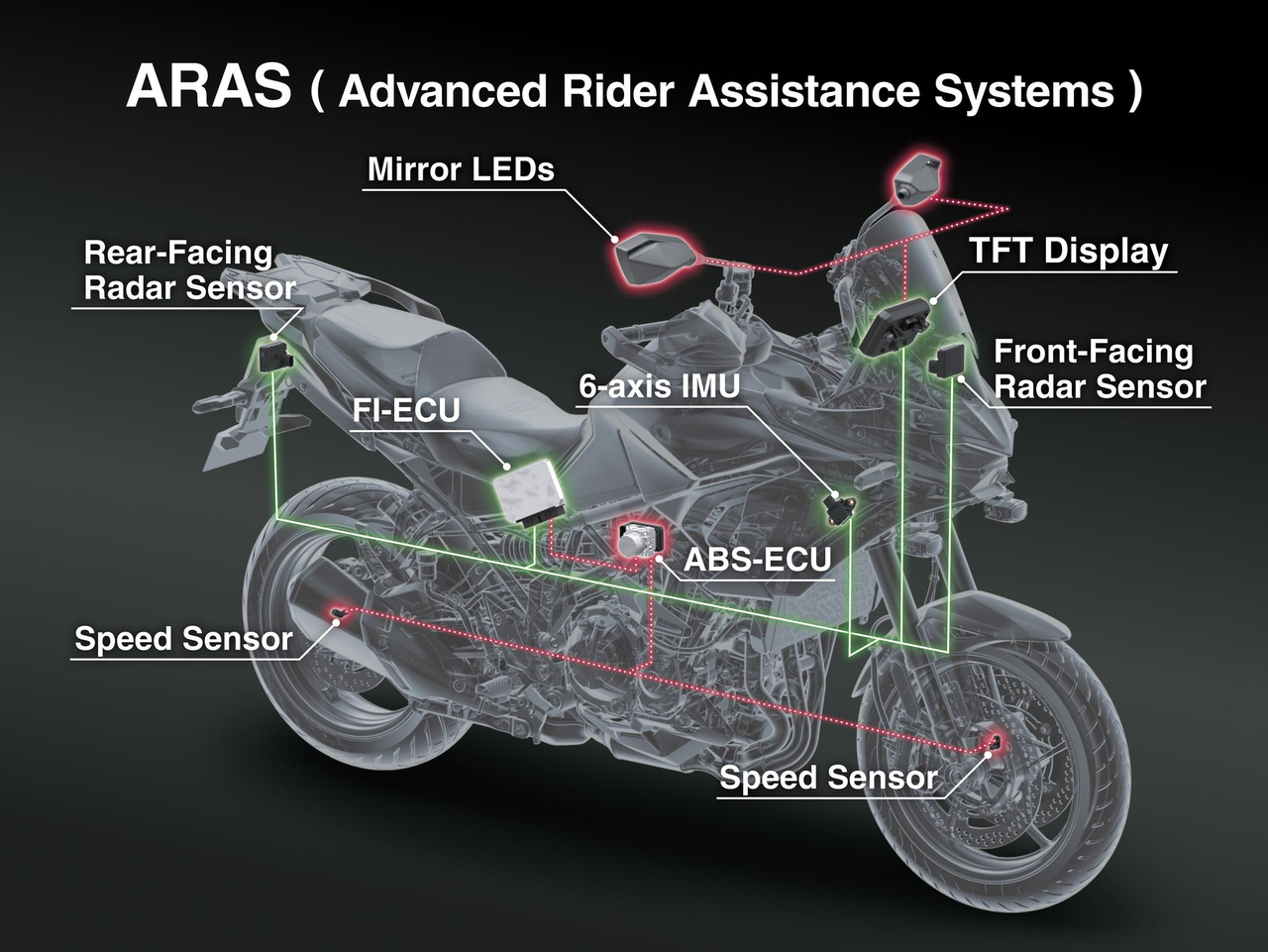
A front-facing radar sensor uses millimetre-wave radar to scan ahead in the rider’s lane. The system takes into account current vehicle speed, the proximity and speed of the vehicle ahead, and the rider-selected distance setting (Near, Medium, or Far).
When the following distance is deemed insufficient, vehicle speed is reduced smoothly and naturally via the Electronic Throttle Valves. ACC Lite differs from ACC in that it does not control braking components, meaning rider intervention is required when stronger deceleration is necessary or when the speed of the preceding vehicle drops significantly below the set cruising speed.
Once sufficient following distance has been regained, the system accelerates to match the preceding vehicle’s speed, or if the lane is clear (because the vehicle ahead has changed lanes, or has accelerated beyond the set speed) the system accelerates naturally back to the set speed. After rider intervention of the brakes—which disengages the system—pushing the RES button is necessary to resume cruise control mode.
ARAS
ARAS (Advanced Rider Assistance Systems) uses radar sensors mounted at the front and rear of the motorcycle to sense other vehicles in proximity and provide a number of features that contribute to next-level comfort and enhanced rider confidence.
ARAS
ARAS (Advanced Rider Assistance Systems):
Using millimetre-wave radar sensors mounted at the front and rear of the motorcycle to sense other vehicles in proximity, ARAS provides a number of features that contribute to next-level comfort and enhanced rider confidence. The features offered vary by model, but may include:
- ACC (Adaptive Cruise Control)
- ACC Lite (Adaptive Cruise Control Lite)
- FCW (Forward Collision Warning)
- BSD (Blind-Spot Detection)
KTRC
KTRC (Kawasaki TRaction Control), Kawasaki's advanced traction control system, offers a selection of modes to suit a wide range of riding situations, from sport riding to touring.
KTRC
KTRC, Kawasaki's advanced traction control system provides both enhanced sport riding performance and the peace of mind to negotiate slippery surfaces with confidence. Multiple rider-selectable modes (the number of modes varies by model) offer progressively greater levels of intrusion to suit the riding situation and rider preference. Less intrusive modes maintain optimum traction during cornering. Designed with sport riding in mind, they facilitate acceleration out of corners by maximising forward drive from the rear wheel. And because Kawasaki’s sophisticated software bases its dynamic analysis on the chassis’ orientation relative to the track surface (rather than relative to a horizontal plane), it is able to take into account corner camber, gradient, etc, and adapt accordingly. In the more intrusive modes (and for some models, in any mode), when excessive wheel spin is detected, engine output is reduced to allow grip to be regained, effectively enabling riders to negotiate both short, slippery patches (train tracks or manhole covers) and extended stretches of bad roads (wet pavement, cobblestone, gravel) with confidence. Models equipped with IMU incorporate chassis-orientation feedback to offer even more precise management.
ABS
ABS (Anti-lock Brake System) ensures stable braking performance by preventing wheel lock during braking.
ABS
Sudden over-application of the brakes, or braking on low-grip surfaces (surfaces with a low coefficient of friction) such as wet asphalt or manhole covers may cause a motorcycle's wheel(s) to lock up and slip. ABS was developed to prevent such incidents. Kawasaki ABS systems are controlled by high precision and highly reliable programming formulated based on thorough testing of numerous riding situations. By ensuring stable braking performance, they offer rider reassurance that contributes to greater riding enjoyment. And to meet the special requirements of certain riders, specialised ABS systems are also available. For example, KIBS (Kawasaki Intelligent anti-lock Brake System) is a high-precision brake system designed specifically for supersport models, enabling sport riding to be enjoyed by a wider range of riders. And by linking the front and rear brakes, K-ACT (Kawasaki Advanced Coactive-braking Technology) ABS provides the confidence to enjoy touring on heavyweight models. Kawasaki is continually working on the development of other advanced ABS systems.
Electronic Cruise Control
Electronic Cruise Control allows vehicle speed to be fixed. Rider support technology that helps reduce rider fatigue on long trips and contributes to increased touring comfort.
Electronic Cruise Control
Electronic Cruise Control allows a desired speed (engine rpm) to be maintained with the simple press of a button. Once activated, the rider does not have to constantly apply the throttle. This reduces stress on the right hand when travelling long distances, enabling relaxed cruising and contributing to a high level of riding comfort.
IMU - Inertial Measurement Unit
Combined with Kawasaki’s proprietary dynamic modelling program, input from the IMU (Inertial Measurement Unit) enables even more precise chassis orientation awareness, the key to bringing Kawasaki’s electronics to the next level.
IMU - Inertial Measurement Unit
IMU means Enhanced Chassis Orientation Awareness. The strength of Kawasaki's cutting-edge electronics has always been the highly sophisticated programming that, using minimal hardware, gives the ECU an accurate real-time picture of what the chassis is doing. Kawasaki's proprietary dynamic modelling program makes skillful use of the magic formula tyre model as it examines changes in multiple parameters, enabling it to take into account changing road and tyre conditions. The addition of an IMU (Inertial Measurement Unit) enables inertia along 6 DOF (degrees of freedom) to be monitored. Acceleration along longitudinal, transverse and vertical axes, plus roll rate and pitch rate are measured. The yaw rate is calculated by the ECU. This additional feedback contributes to an even clearer real-time picture of chassis orientation, enabling even more precise management for control at the limit. With the addition of the IMU and the latest evolution of Kawasaki's advanced modelling software, Kawasaki's electronic engine and chassis management technology takes the step to the next level changing from setting-type and reaction-type systems to feedback-type systems to deliver even greater levels of riding excitement.
Assist & Slipper Clutch
Based on racing technology, the Assist & Slipper Clutch acts as both a back-torque limiter and a self-servo mechanism that enables a lighter clutch lever pull.
Assist & Slipper Clutch
Based on feedback from racing activities, the Assist & Slipper Clutch uses two types of cams (an assist cam and a slipper cam) to either drive the clutch hub and operating plate together or apart. Under normal operation, the assist cam functions as a self-servo mechanism, pulling the clutch hub and operating plate together to compress the clutch plates. This allows the total clutch spring load to be reduced, resulting in a lighter clutch lever feel when operating the clutch. When excessive engine braking occurs as a result of quick downshifts (or an accidental downshift) the slipper cam comes into play, forcing the clutch hub and operating plate apart. This relieves pressure on the clutch plates to reduce back-torque and helps prevent the rear tyre from hopping and skidding. This race-style function is particularly useful when sport or track riding.
Electronic Throttle Valves
Electronic Throttle Valves allow the ECU to deliver the ideal amount of fuel and air to the engine.
Electronic Throttle Valves
Kawasaki's fully electronic throttle actuation system enables the ECU to control the volume of both the fuel (via fuel injectors) and the air (via throttle valves) delivered to the engine. Ideal fuel injection and throttle valve position results in smooth, natural engine response and the ideal engine output. The system also makes a significant contribution to reduced emissions. Electronic throttle valves also enable more precise control of electronic engine management systems like S-KTRC and KTRC, and allow the implementation of electronic systems like KLCM, Kawasaki Engine Brake Control, and Electronic Cruise Control.
Power Modes
Power Mode selection allows engine power delivery to be changed to suit the riding situation.
Power Modes
Models equipped with multiple Power Modes offer riders an easily selectable choice of engine power delivery to suit riding conditions or preference. The number of modes vary by model, as do the types of modes available. Some modes limit maximum power, while others offer milder (or sharper) throttle response. Other modes cater to specific riding or driving situations.
FCW
FCW (Forward Collision Warning) warns the rider when the system determines that continuing at the current speed may result in a collision with the vehicle in front.
FCW
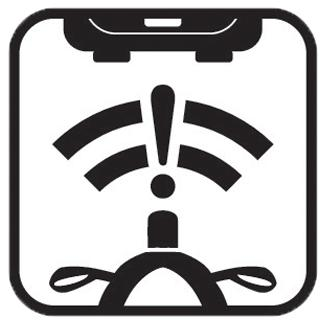
FCW (Forward Collision Warning) warns the rider when the system determines that continuing at the current speed may result in a collision with the vehicle in front. When the system determines that continuing at the current speed may result in a collision with the vehicle in front, it warns the rider. A front-facing radar sensor monitors the distance and speed of the vehicle in front. When a vehicle is in close proximity and there is danger of a collision should the current speed be maintained, the system alerts the rider using a bright flashing red LED light above the instrument panel. A warning is also shown on the TFT display. Riders can set the alert timing according to preference: Early, Medium, Late.
BSD
BSD (Blind-Spot Detection) monitors the bike’s surroundings and alerts the rider to presence of a vehicle approaching in the rider’s blind spot.
BSD
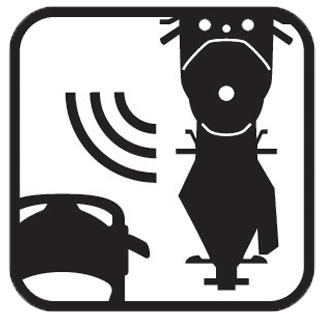
BSD (Blind-Spot Detection) monitors the bike’s surroundings and alerts the rider to presence of a vehicle approaching in the rider’s blind spot. Using a rear-facing radar sensor, BSD monitors the bike’s surroundings and alerts the rider to presence of a vehicle approaching in the rider’s blind spot. The rear-facing radar sensor scans behind in the lanes to the left and right of the rider. When an approaching vehicle is detected, an LED built into the rearview mirror will light up. (Note: BSD will not alert the rider to vehicles directly behind the bike, or vehicles that are moving away from the bike.) Should the rider indicate the intent to change lanes by switching on their turn signal while a vehicle is detected in a blind spot, the mirror LED will flash.
ESS
ESS (Emergency Stop Signal) causes the brake light to flash during hard braking, calling attention to the bike’s quick deceleration.
ESS
ESS (Emergency Stop Signal) causes the brake light to flash during hard braking, calling attention to the bike’s quick deceleration. During hard braking, ESS causes the brake light to flash – a visual clue to following vehicles calling attention to the bike’s quick deceleration.
ERGO-FIT
ERGO-FIT is an interface system that allows a wide range of riders to feel at one with their machine.
ERGO-FIT
Proper fit is key for rider comfort and control. However, the ideal fit varies from rider to rider, depending on their physical dimensions and riding style. ERGO-FIT is an interface system designed to allow riders to find their ideal riding position. Various points of the chassis interface (the handlebar, footpegs and seat, etc) can be adjusted through a combination of interchangeable parts and parts with adjustable positions. This enables a wide range of riders to find a riding position that offers both comfort and control. Feeling at one with their machine, they will be able to experience how Kawasaki machines are fun and rewarding to ride. *Adjustable parts and their range of adjustability vary by model.
Smartphone Connectivity
Smartphone connectivity contributes to an enhanced motorcycling experience by enabling riders to connect to their motorcycle wirelessly.
Smartphone Connectivity
Clever technology enables riders to connect to their motorcycle wirelessly. Using the smartphone application RIDEOLOGY THE APP a number of instrument functions can be accessed, contributing to an enhanced motorcycling experience. Vehicle information (such as the odometer, fuel gauge, maintenance schedule, etc) can be viewed on the smartphone. Riding logs (varies by model, but may include GPS route, gear position, rpm, and other information) can be viewed on the smartphone. When connected, telephone (call, mail) notices are displayed on the instrument panel. Riders can also make changes to their motorcycle instrument display settings (preferred units, clock and date setting, etc) via the smartphone. And on certain models, it is even possible to check and adjust vehicle settings (such as Rider Mode, electronic rider support features, and payload settings) using the smartphone.
KQS - Kawasaki Quick Shifter
Designed to help riders maximise their acceleration on the circuit by enabling clutchless upshifts with the throttle fully open, KQS detects that the shift lever has been actuated and sends a signal to the ECU to cut ignition so that the next gear can be engaged without having to use the clutch. On models that offer clutchless downshifts, during deceleration the system automatically controls engine speed so that the next lower gear can be selected without operating the clutch.
- ACC Lite
- ARAS
- KTRC
- ABS
- Electronic Cruise Control
- IMU - Inertial Measurement Unit
- Assist & Slipper Clutch
- Electronic Throttle Valves
- Power Modes
- FCW
- BSD
- ESS
- ERGO-FIT
- Smartphone Connectivity
- KQS - Kawasaki Quick Shifter
ACC Lite
ACC Lite (Adaptive Cruise Control Lite) maintains the speed set by the rider, but adjusts the vehicle speed to maintain a suitable following distance from the vehicle in front. ACC Lite differs from ACC in that it does not control braking components, using engine management exclusively to adjust vehicle speed.
ACC Lite
ACC Lite (Adaptive Cruise Control Lite):
An enhanced version of Electronic Cruise Control, ACC Lite maintains the speed set by the rider, but adjusts the vehicle speed to maintain a suitable following distance from the vehicle in front.
A front-facing radar sensor uses millimetre-wave radar to scan ahead in the rider’s lane. The system takes into account current vehicle speed, the proximity and speed of the vehicle ahead, and the rider-selected distance setting (Near, Medium, or Far).
When the following distance is deemed insufficient, vehicle speed is reduced smoothly and naturally via the Electronic Throttle Valves. ACC Lite differs from ACC in that it does not control braking components, meaning rider intervention is required when stronger deceleration is necessary or when the speed of the preceding vehicle drops significantly below the set cruising speed.
Once sufficient following distance has been regained, the system accelerates to match the preceding vehicle’s speed, or if the lane is clear (because the vehicle ahead has changed lanes, or has accelerated beyond the set speed) the system accelerates naturally back to the set speed. After rider intervention of the brakes—which disengages the system—pushing the RES button is necessary to resume cruise control mode.
ARAS
ARAS (Advanced Rider Assistance Systems) uses radar sensors mounted at the front and rear of the motorcycle to sense other vehicles in proximity and provide a number of features that contribute to next-level comfort and enhanced rider confidence.
ARAS
ARAS (Advanced Rider Assistance Systems):
Using millimetre-wave radar sensors mounted at the front and rear of the motorcycle to sense other vehicles in proximity, ARAS provides a number of features that contribute to next-level comfort and enhanced rider confidence. The features offered vary by model, but may include:
- ACC (Adaptive Cruise Control)
- ACC Lite (Adaptive Cruise Control Lite)
- FCW (Forward Collision Warning)
- BSD (Blind-Spot Detection)
KTRC
KTRC (Kawasaki TRaction Control), Kawasaki's advanced traction control system, offers a selection of modes to suit a wide range of riding situations, from sport riding to touring.
KTRC
KTRC, Kawasaki's advanced traction control system provides both enhanced sport riding performance and the peace of mind to negotiate slippery surfaces with confidence. Multiple rider-selectable modes (the number of modes varies by model) offer progressively greater levels of intrusion to suit the riding situation and rider preference. Less intrusive modes maintain optimum traction during cornering. Designed with sport riding in mind, they facilitate acceleration out of corners by maximising forward drive from the rear wheel. And because Kawasaki’s sophisticated software bases its dynamic analysis on the chassis’ orientation relative to the track surface (rather than relative to a horizontal plane), it is able to take into account corner camber, gradient, etc, and adapt accordingly. In the more intrusive modes (and for some models, in any mode), when excessive wheel spin is detected, engine output is reduced to allow grip to be regained, effectively enabling riders to negotiate both short, slippery patches (train tracks or manhole covers) and extended stretches of bad roads (wet pavement, cobblestone, gravel) with confidence. Models equipped with IMU incorporate chassis-orientation feedback to offer even more precise management.
ABS
ABS (Anti-lock Brake System) ensures stable braking performance by preventing wheel lock during braking.
ABS
Sudden over-application of the brakes, or braking on low-grip surfaces (surfaces with a low coefficient of friction) such as wet asphalt or manhole covers may cause a motorcycle's wheel(s) to lock up and slip. ABS was developed to prevent such incidents. Kawasaki ABS systems are controlled by high precision and highly reliable programming formulated based on thorough testing of numerous riding situations. By ensuring stable braking performance, they offer rider reassurance that contributes to greater riding enjoyment. And to meet the special requirements of certain riders, specialised ABS systems are also available. For example, KIBS (Kawasaki Intelligent anti-lock Brake System) is a high-precision brake system designed specifically for supersport models, enabling sport riding to be enjoyed by a wider range of riders. And by linking the front and rear brakes, K-ACT (Kawasaki Advanced Coactive-braking Technology) ABS provides the confidence to enjoy touring on heavyweight models. Kawasaki is continually working on the development of other advanced ABS systems.
Electronic Cruise Control
Electronic Cruise Control allows vehicle speed to be fixed. Rider support technology that helps reduce rider fatigue on long trips and contributes to increased touring comfort.
Electronic Cruise Control
Electronic Cruise Control allows a desired speed (engine rpm) to be maintained with the simple press of a button. Once activated, the rider does not have to constantly apply the throttle. This reduces stress on the right hand when travelling long distances, enabling relaxed cruising and contributing to a high level of riding comfort.
IMU - Inertial Measurement Unit
Combined with Kawasaki’s proprietary dynamic modelling program, input from the IMU (Inertial Measurement Unit) enables even more precise chassis orientation awareness, the key to bringing Kawasaki’s electronics to the next level.
IMU - Inertial Measurement Unit
IMU means Enhanced Chassis Orientation Awareness. The strength of Kawasaki's cutting-edge electronics has always been the highly sophisticated programming that, using minimal hardware, gives the ECU an accurate real-time picture of what the chassis is doing. Kawasaki's proprietary dynamic modelling program makes skillful use of the magic formula tyre model as it examines changes in multiple parameters, enabling it to take into account changing road and tyre conditions. The addition of an IMU (Inertial Measurement Unit) enables inertia along 6 DOF (degrees of freedom) to be monitored. Acceleration along longitudinal, transverse and vertical axes, plus roll rate and pitch rate are measured. The yaw rate is calculated by the ECU. This additional feedback contributes to an even clearer real-time picture of chassis orientation, enabling even more precise management for control at the limit. With the addition of the IMU and the latest evolution of Kawasaki's advanced modelling software, Kawasaki's electronic engine and chassis management technology takes the step to the next level changing from setting-type and reaction-type systems to feedback-type systems to deliver even greater levels of riding excitement.
Assist & Slipper Clutch
Based on racing technology, the Assist & Slipper Clutch acts as both a back-torque limiter and a self-servo mechanism that enables a lighter clutch lever pull.
Assist & Slipper Clutch
Based on feedback from racing activities, the Assist & Slipper Clutch uses two types of cams (an assist cam and a slipper cam) to either drive the clutch hub and operating plate together or apart. Under normal operation, the assist cam functions as a self-servo mechanism, pulling the clutch hub and operating plate together to compress the clutch plates. This allows the total clutch spring load to be reduced, resulting in a lighter clutch lever feel when operating the clutch. When excessive engine braking occurs as a result of quick downshifts (or an accidental downshift) the slipper cam comes into play, forcing the clutch hub and operating plate apart. This relieves pressure on the clutch plates to reduce back-torque and helps prevent the rear tyre from hopping and skidding. This race-style function is particularly useful when sport or track riding.
Electronic Throttle Valves
Electronic Throttle Valves allow the ECU to deliver the ideal amount of fuel and air to the engine.
Electronic Throttle Valves
Kawasaki's fully electronic throttle actuation system enables the ECU to control the volume of both the fuel (via fuel injectors) and the air (via throttle valves) delivered to the engine. Ideal fuel injection and throttle valve position results in smooth, natural engine response and the ideal engine output. The system also makes a significant contribution to reduced emissions. Electronic throttle valves also enable more precise control of electronic engine management systems like S-KTRC and KTRC, and allow the implementation of electronic systems like KLCM, Kawasaki Engine Brake Control, and Electronic Cruise Control.
Power Modes
Power Mode selection allows engine power delivery to be changed to suit the riding situation.
Power Modes
Models equipped with multiple Power Modes offer riders an easily selectable choice of engine power delivery to suit riding conditions or preference. The number of modes vary by model, as do the types of modes available. Some modes limit maximum power, while others offer milder (or sharper) throttle response. Other modes cater to specific riding or driving situations.
FCW
FCW (Forward Collision Warning) warns the rider when the system determines that continuing at the current speed may result in a collision with the vehicle in front.
FCW
FCW (Forward Collision Warning) warns the rider when the system determines that continuing at the current speed may result in a collision with the vehicle in front. When the system determines that continuing at the current speed may result in a collision with the vehicle in front, it warns the rider. A front-facing radar sensor monitors the distance and speed of the vehicle in front. When a vehicle is in close proximity and there is danger of a collision should the current speed be maintained, the system alerts the rider using a bright flashing red LED light above the instrument panel. A warning is also shown on the TFT display. Riders can set the alert timing according to preference: Early, Medium, Late.
BSD
BSD (Blind-Spot Detection) monitors the bike’s surroundings and alerts the rider to presence of a vehicle approaching in the rider’s blind spot.
BSD
BSD (Blind-Spot Detection) monitors the bike’s surroundings and alerts the rider to presence of a vehicle approaching in the rider’s blind spot. Using a rear-facing radar sensor, BSD monitors the bike’s surroundings and alerts the rider to presence of a vehicle approaching in the rider’s blind spot. The rear-facing radar sensor scans behind in the lanes to the left and right of the rider. When an approaching vehicle is detected, an LED built into the rearview mirror will light up. (Note: BSD will not alert the rider to vehicles directly behind the bike, or vehicles that are moving away from the bike.) Should the rider indicate the intent to change lanes by switching on their turn signal while a vehicle is detected in a blind spot, the mirror LED will flash.
ESS
ESS (Emergency Stop Signal) causes the brake light to flash during hard braking, calling attention to the bike’s quick deceleration.
ESS
ESS (Emergency Stop Signal) causes the brake light to flash during hard braking, calling attention to the bike’s quick deceleration. During hard braking, ESS causes the brake light to flash – a visual clue to following vehicles calling attention to the bike’s quick deceleration.
ERGO-FIT
ERGO-FIT is an interface system that allows a wide range of riders to feel at one with their machine.
ERGO-FIT
Proper fit is key for rider comfort and control. However, the ideal fit varies from rider to rider, depending on their physical dimensions and riding style. ERGO-FIT is an interface system designed to allow riders to find their ideal riding position. Various points of the chassis interface (the handlebar, footpegs and seat, etc) can be adjusted through a combination of interchangeable parts and parts with adjustable positions. This enables a wide range of riders to find a riding position that offers both comfort and control. Feeling at one with their machine, they will be able to experience how Kawasaki machines are fun and rewarding to ride. *Adjustable parts and their range of adjustability vary by model.
Smartphone Connectivity
Smartphone connectivity contributes to an enhanced motorcycling experience by enabling riders to connect to their motorcycle wirelessly.
Smartphone Connectivity
Clever technology enables riders to connect to their motorcycle wirelessly. Using the smartphone application RIDEOLOGY THE APP a number of instrument functions can be accessed, contributing to an enhanced motorcycling experience. Vehicle information (such as the odometer, fuel gauge, maintenance schedule, etc) can be viewed on the smartphone. Riding logs (varies by model, but may include GPS route, gear position, rpm, and other information) can be viewed on the smartphone. When connected, telephone (call, mail) notices are displayed on the instrument panel. Riders can also make changes to their motorcycle instrument display settings (preferred units, clock and date setting, etc) via the smartphone. And on certain models, it is even possible to check and adjust vehicle settings (such as Rider Mode, electronic rider support features, and payload settings) using the smartphone.
KQS - Kawasaki Quick Shifter
Designed to help riders maximise their acceleration on the circuit by enabling clutchless upshifts with the throttle fully open, KQS detects that the shift lever has been actuated and sends a signal to the ECU to cut ignition so that the next gear can be engaged without having to use the clutch. On models that offer clutchless downshifts, during deceleration the system automatically controls engine speed so that the next lower gear can be selected without operating the clutch.
Inpage Navigation Section: Accessories